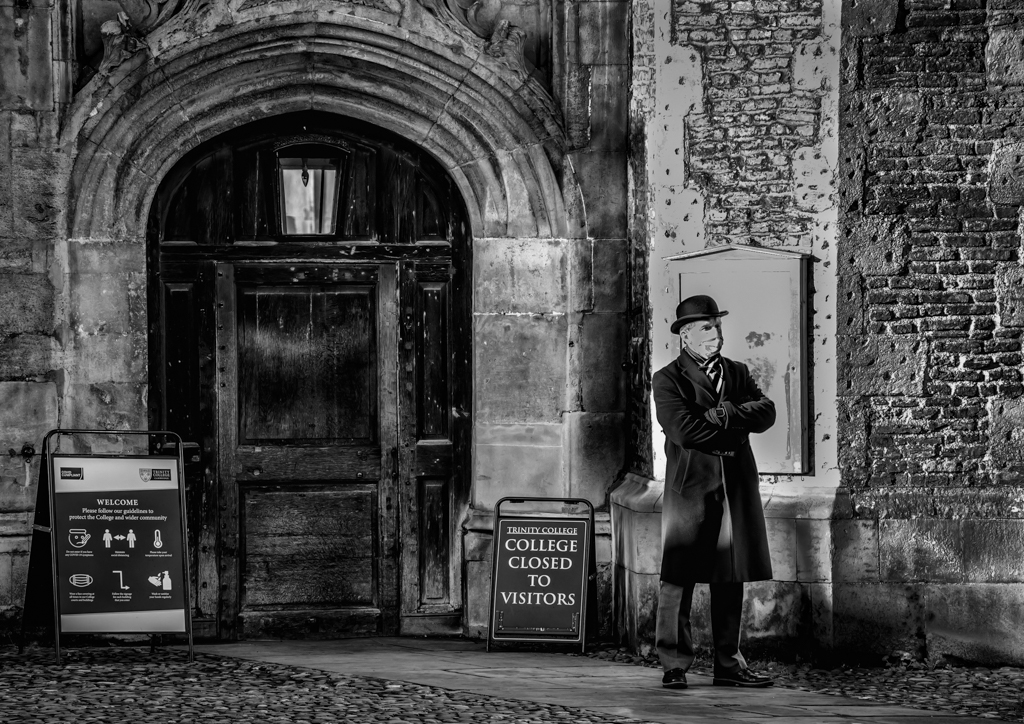
I took this image in Cambridge mid December. It all seems to have got a lot worse since then. It sums up 2020. What with Brexit and Covid it has not been a good year for the UK.
John Gough Photography
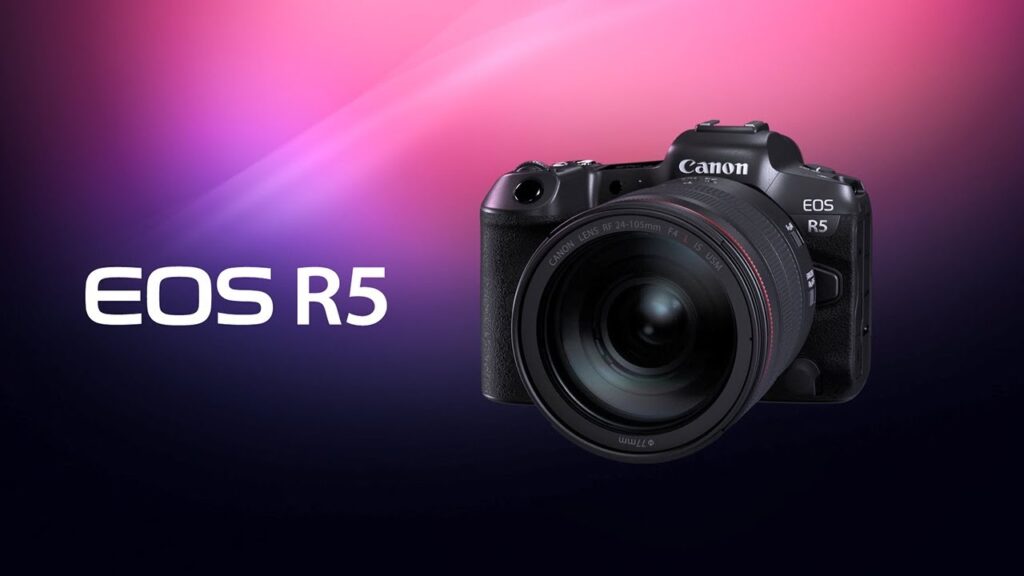
Let’s face it you need some really good reasons to buy a Canon EOS R5. If you are not buying this camera for its video capability, and I am not. If you are not a professional photographer who needs the dual card slots and rugged build. How do you justify a spend of £4100 (Dec 2019) on a stills camera (body only)? I could buy a second hand car for that or at least five iPhone 12s. So let’s run through 10 reasons to buy the Canon R5.
I know other camera makers have got there first, but fair enough Canon has caught up with in-body-stabilisation. Remarkably the 5-axis IBIS system achieves up to 8 stops. That is virtually like shooting in the dark. (Reason 1) Couple this with the remarkable ISO on this camera (Reason 2), and there is now no need to buy big glass for low light photography. The EOS R5 stabilisation and ISO can take care of it.
Look at this real world example from Bluewater Photo
We took full advantage of this feature and even shot some of our photos as low as 1/13th of a second. Even at those speeds the images were as crisp as if they had been shot at the camera’s sync speed. IBIS also allows you to expand the limits of your camera by allowing you to shoot at lower shutter speeds instead of having to raise your ISO. The added detail and peace of mind that there will be no motion blur makes Canon’s IBIS system one of its top features.
For this, we have to cross to the pre-eminent camera reviewer Ken Rockwell. This is what he says:
As seen at normal image sizes below, the R5 pretty much makes the same images from ISO 50 (L) to ISO 25,600. ISO 50 is a “pull” ISO, and thus has more highlight contrast. This usually increases perceived highlight detail, and can lead to clipped highlights if you have too much subject contrast, as in the case of the window reflection in the glass of the clock face. ISO 51,200 starts to have some chroma mottling (colored green and magenta blobs) and ISO 102,400 (H) gets blotchier and grainier and the shadows are lighter than they should be, but still quite usable if I need it for normal-sized images.
What this means in practice is that you can shoot ISO 25,600 with little or no effect on image quality, and beyond that, up to ISO 102.400 the images are still useable. Follow the link above to see Ken’s example high ISO images.
Two of my favourite lenses are the RF 35mm f1.8 macro, which has 5 stops stabilisation but has 7 stops on the R5, and the RF 24-240mm f4-6.3 which increases from 5 stops to 6.5 stops. These are both quality lenses but not wildly expensive and in my view are as sharp as any Canon EF lens. (Reason 3)
This is because of the redesigned flange on the R series cameras. This means that because these cameras do not have a mirror assembly the lens mount can be placed closer to the sensor. From 44mm on EF lenses to 20mm on RF lenses.
Why does this mean better lenses at a lower price point? Well, it allows for a large element to be placed at the rear of the lens, which reduces the scope for optical aberrations and means lenses can be designed with fewer overall elements, which means they can be made smaller and with less glass.
The Canon EOS R5 has a 45MP CMOS full frame sensor. If you want to find out how good it is. Head off to DXOMARK where sensors from the major manufacturers are reviewed and rated. The R5 sensor is rated at 95. Is that good? Yes. How does it compare with other Canon sensors? It is the best. The 5D Mark IV scores 91 and the R6 scores 90. Is it the best sensor in its class? No the Luminex DC-S1R scores 100 and is the best. Some Nikon and Sony cameras also beat the R5. But!
If you dive into the data here. Then it is apparent that in terms of dynamic range the R5 sensor is up with the best. Colour sensitivity is as good as the best at higher ISOs but there is a fraction more noise at lower ISOs. However, at higher ISOs the R5 performs as well as the Luminex.
As for sensor performance, the EOS R5 sensor represents a high water mark for Canon. Maximum dynamic range is competitive with the best in class, and the R5 sensor offers a useful advantage at some crucial ISO settings over its rivals. It also has excellent color and low noise at high ISOs, which all go toward making the Canon EOS R5 one of the most well-rounded performers in this important category. It may have taken a while to get here, but the Canon EOS R5 looks set to be the one to beat.
If you are a specialist photographer doing more studio work. Then you may want to hold off until the rumoured high megapixel R5 (96MP?) is launched next year. Otherwise, DXOMARK has proved that the R5 sensor is the best Canon yet, and a great allrounder in all lighting conditions. (Reason 4)
The top line is that this camera can lock onto an animal’s eye, and hold focus as the animal moves while shooting at 20fps. That is a 45MP file being produced every 0.05 seconds. As a result the R5 is the world’s highest pixel-rate camera at 900 MP/s. (Reason 5)
This camera is capable of shifting pixels faster than any other camera, utilising the video capability of DIGIC X processor, and the new RF mount which can move data ten times faster than the older EF mount.
The autofocus will detect people, bird and mammal faces and eyes. Recognising and tracking these subjects as they move around a scene. Even if a subject turns away from the camera, their head continues to be tracked so that their face is sharp when they turn back towards the camera.
The autofocus can even do this in low light down to -6EF which is roughly the light provided by a half moon.
We are now half way through the 10 reasons to buy a Canon R5. Convinced yet?
You may be wary of moving to an Electronic Viewfinder (EVF) from a traditional DSLR with a mirror. Have no fear the R5 is here.
The R5 EVF has a resolution of 5.76m dots and a 120fps refresh rate. This is getting much closer to the sort of detail you would expect from a traditional through the lens experience. (Reason 6).
There is also a flippy screen (Reason 7) which allows you to take pictures from those hard to get low and odd angles.
There is weather sealing and there is weather sealing. It is not very exciting but the weather sealing on the R5 is reckoned to be as good as the Canon 5D Mark IV. (Reason 8)
Back in 2018 imaging-resource.com tested four ‘pro’ cameras for their weather sealing characteristics.
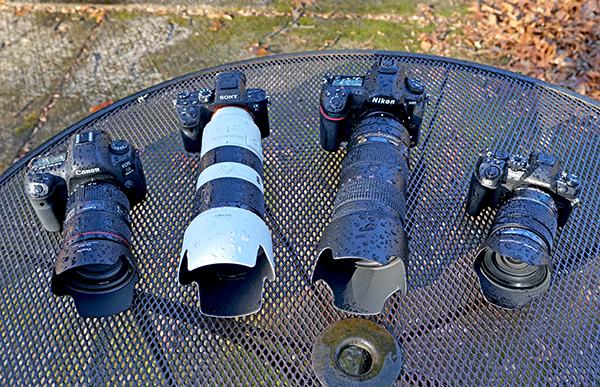
They subjected the cameras to a 15 minute rainstorm and 15 minutes of mist with fine water droplets. (That fine rain that soaks you through according to Peter Kay.)
This is the result:
Sony needs to up their environmental-sealing game if they want to compete in this high-end/professional market segment. We’d feel differently if all the cameras failed the test; we would have concluded that the test was just too harsh for the current state of the market, even though it was a reasonable representation of conditions a camera might be exposed to. That wasn’t the case, though; the D850 had a very minor problem with leakage into its viewfinder, that seems to be entirely solved by using the BS-3 hot shoe cover – and the 5DIV and E-M1II had no problems whatsoever.
It’s about the balance of risks. You probably never intend to stand in the rain in a muddy field in the Lake District shooting the landscape. Probably you will never be at the ocean edge on a beach in California photographing kiteboards. You will no doubt try and avoid the dust storms of Kuwait and Syria. However, there will come a day when you are thankful for the Canon professional level weather sealing in the R5.
Second lastly a small feature. There is a blue microphone button on the top left at the back of the camera which records spoken notes. (It can also be configured to rate exposures). This is a unique feature and can record voice memos up to 30 seconds. To play the memo (you will see a [♪] icon if one was recorded for an image), tap the mic button to start.
(Reason 9) This has to be a must for photojournalists, sports photographers and travel writers.
The R5 has both WiFi and Bluetooth. The camera uses an always on Bluetooth low energy connection to connect to smart devices, allowing images to be browsed edited and transmitted on phones and tablets from anywhere. (Reason 10) Send images directly to a client or post immediately on social media.
This is the last of the 10 reasons to buy a Canon R5
Ten good excuses to part with a lot of money. 10 reasons to buy the Canon R5. However remember a new camera is not going to make you a better photographer, but the R5 may just give you the edge
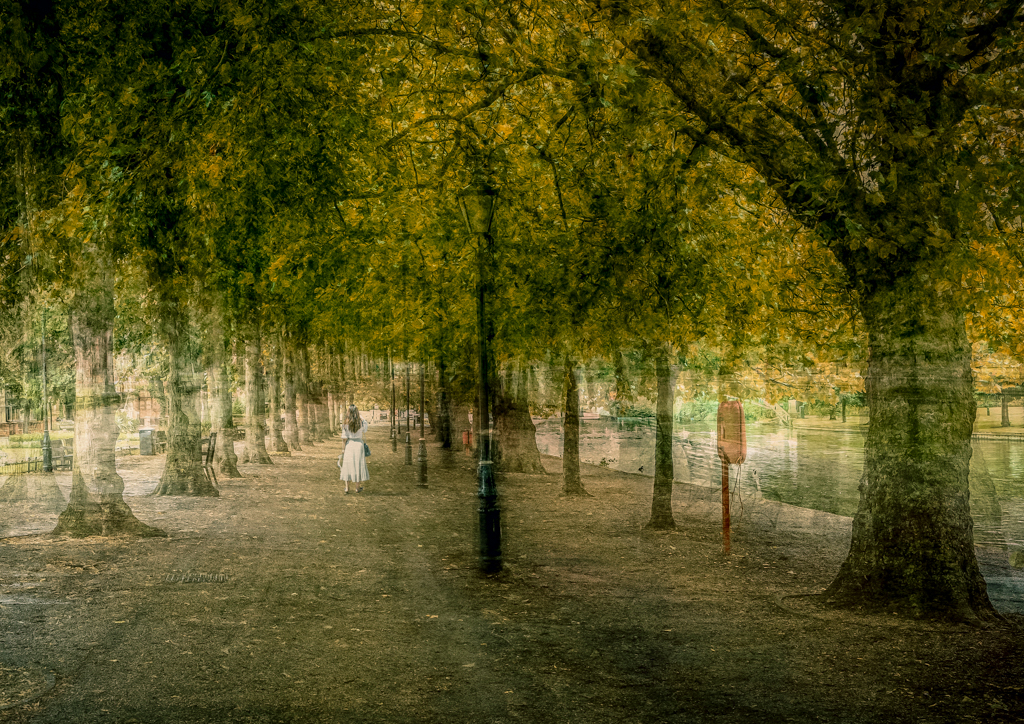
This is my image of the month for November. Once again it is a Pep Ventosa and figure composite.
I have been musing that this yearning for impressionism is a reaction to COVID and lockdown. We are not living full lives anymore. So many people are desperately lonely. We live our lives in a state of proxy. We want clarity but cannot see through the confusion. We are lost.
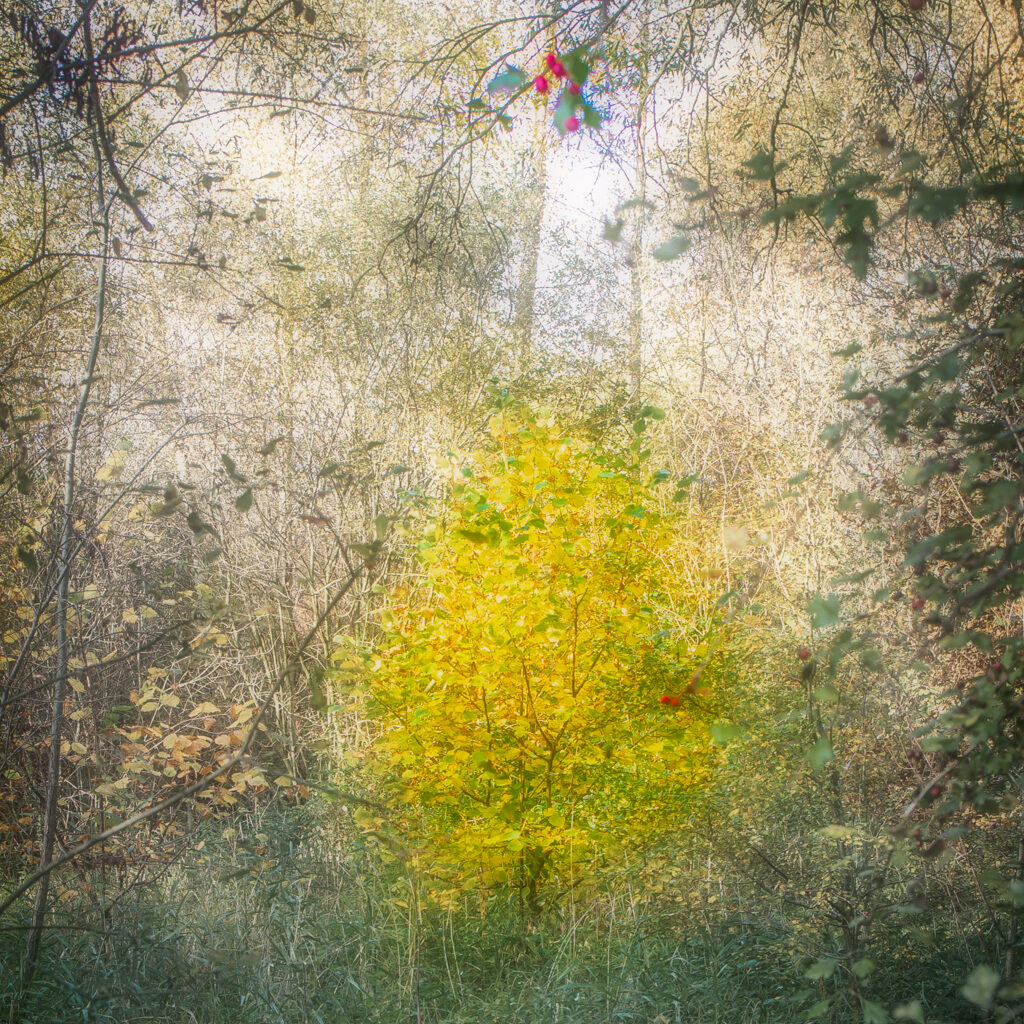
One of my big obsessions with photography is to try to photograph how the mind interprets what we see rather than what the camera is pointing at. Misty Autumn photography is about looking at Autumn leaves, trees and landscapes through an ethereal, golden, opaque lens.
I wrote about photographing the Autumn colours before the season began. I was looking forward to the season and trying to get an impression of Autumn perhaps through multiple exposures. Due to the lockdowns, we are having here in the UK, I think we are seeing the seasons so much more vividly. Walking through nature has certainly maintained my sanity during these worrying months.
My mentor through this time has been Glenys Garnett. I recently watched an RPS talk she gave about her photography. She talked about how she will frequently photograph the same patch of woodland behind her house in the pursuit of wonderful dreamy images.
As she says, working in a familiar space will force your creativity. Encouraging you to make images about how you feel, and embracing abstraction. She suggests looking at the muted colours of work by American painter, Andrew Wyeth.
Looking for soft light and a subdued palette has led me to the work of Jo Stephen.
I am drawn to using creative photographic techniques as they enable me to explore my connection to nature in a way that representational photography does not always allow. … Jo Stephen
I agree, that statement sums up so simply my view that seeing is believing but believing is what we see.
These are some of her Autumn images and some of her woodland images.
With thanks to Jo Stephen, this is a simple technique to get that wonderful soft lighting.
This is one I tried earlier………….

This is a beautiful effect which I am also going to experiment using with my Pep Ventosa and multiple exposure images.
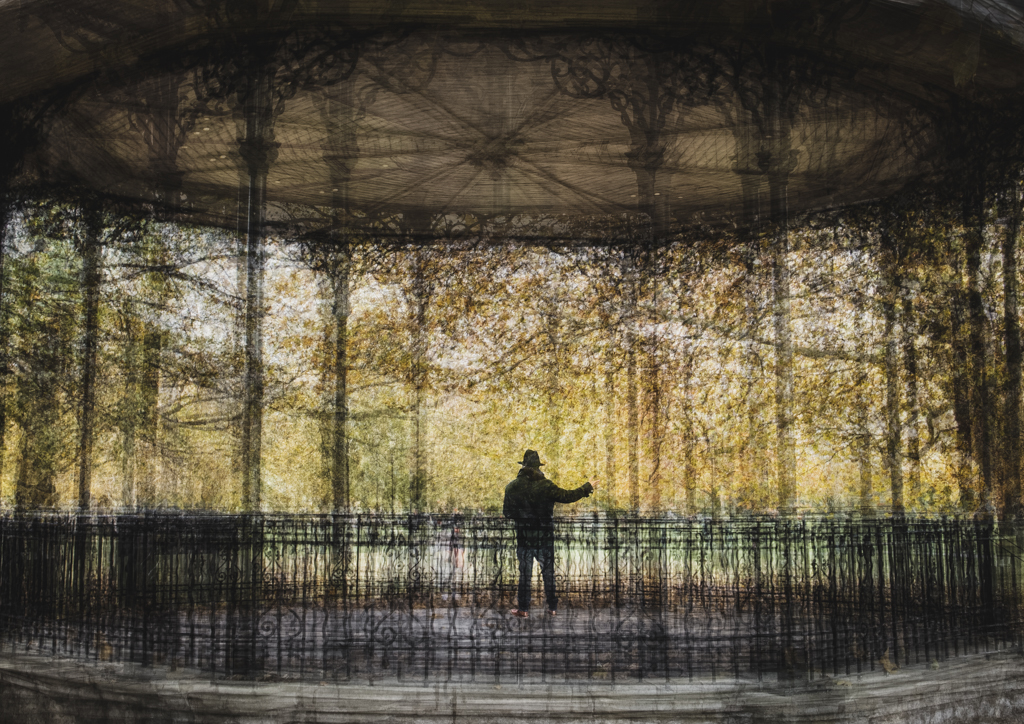
This is my October 2020 image of the month. I have been developing my Pep Ventosa style, by adding some static items to the swirl of confusion created by the multiple images.
I am fascinated by the way the technique creates a view closer to how we see. Or at least how I think we see!
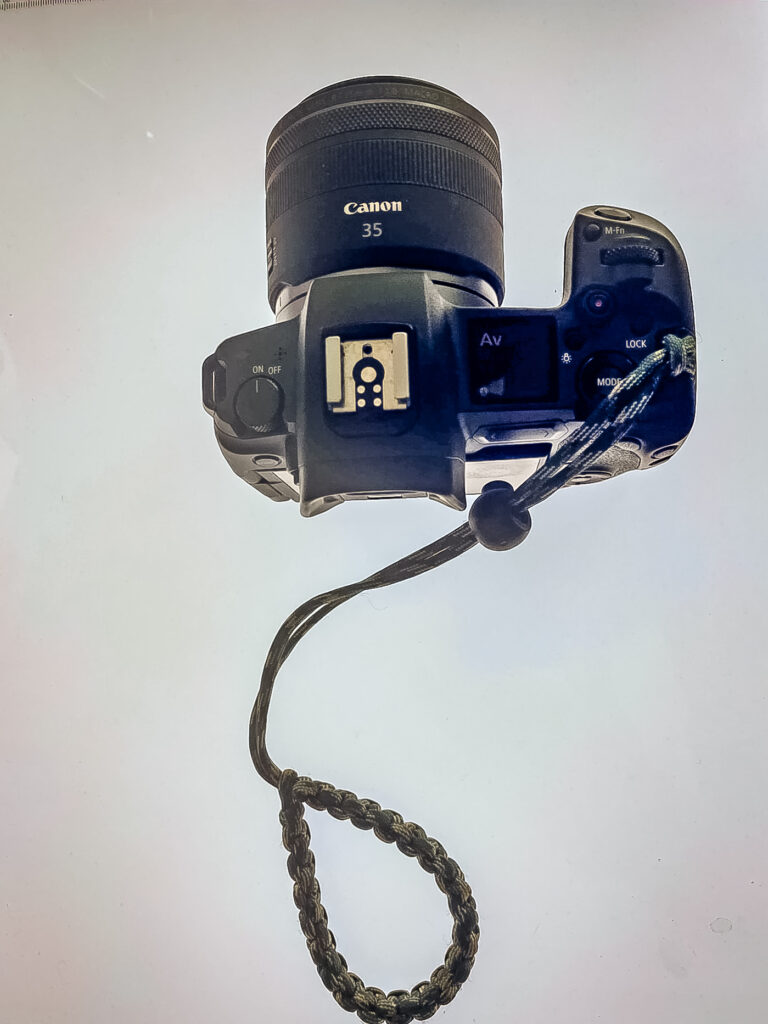
I often read posts like this on Facebook where unfortunately someone has dropped a very expensive camera. When they could have saved themselves a lot of anguish by using a camera wrist strap:
A very, very sad day for me 😞 The unthinkable happened and I dropped my 5D Mark Iv today. Now the camera shows Err 20 and the mirror gets stuck when I press the shutter – it gets stuck midway and doesn’t lift all the way up. I bought the camera brand new off of Ebay and according to Canon the serial number indicates this product was not intended for sale in the United States and is ineligible for registration and support in the U.S. Has anyone had experience with an issue like that? I don’t know where to send my camera to be fixed. It’s brand new with less that 700 shutter count. Any advice or reputable repair service referral within the US is greatly appreciated!
We all walk around with several thousand pounds of gear in our hands. I have come close to dropping mine several times.
Long camera straps can be cumbersome, so I opt to always tether my camera to my wrist with a camera wrist strap.
This is what I recommend:
It is paracord that fits quite discretely around the wrist.
If it is too thick to go through the eyelet on your camera then try these connectors.
In these troubling times, stay safe and keep your camera safe.
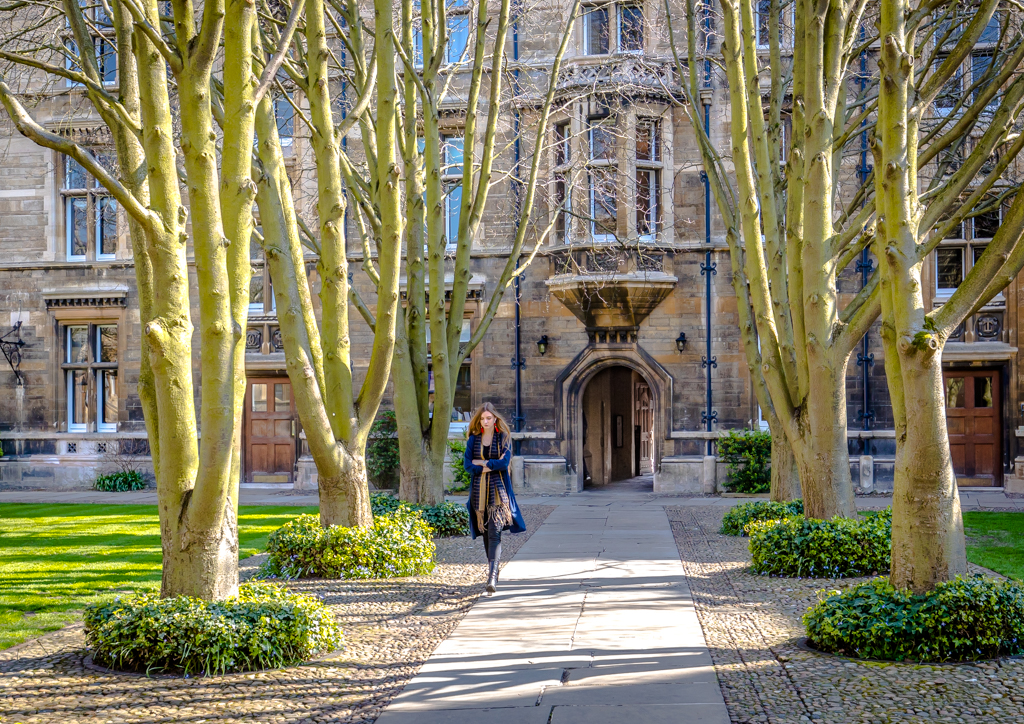
The Canon EOS R was launched about two years ago (September 2018). I have been using a Canon EOS R now most of that time. I have taken thousands of photographs in all conditions and of all genre: street to portrait, landscape to travel. So, I thought it was about time that I summarised my experience with an EOS R long term review.
I am not going into specs or lab tests, this is just an honest user review, warts and all. Except that there are not many warts. I have concentrated on stills photography, not video. I use my phone for video, and it works just fine. The top line is I have come to love this camera, so much so that when the R5 and R6 came out, I did not even consider changing. Why?
When the camera first came out there was so much negativity around it not having two card slots etc, that it eclipsed just how good a camera this was. Since then long term reviews have been much more positive and balanced.
The Canon EOS R was the first full frame mirrorless camera that Canon produced. There was a lot riding on its success. Canon had invested heavily to move into this growing market. So, nothing was left to chance and in my view, the EOS R was over engineered to ensure its success. This means you get a lot of camera for your money.
The camera has a solid weather sealed magnesium alloy body. The closures are well fitting. The grip is comfortable, and the camera is well balanced. You could walk for hours with this camera in your hand. I have done so.
The EOS R may not have the biggest sensor, best low light performance or dynamic range, but it is just right in all these areas to provide a competent all round capability. After all the EOS R has the same sensor as the Canon EOS 5 MKIV which is so highly regarded, it is placed on a pedestal or at least a very tall tripod. The files are not too big or too small, plus there is the advantage of the vivid Canon colours, regarded as the best in the business.
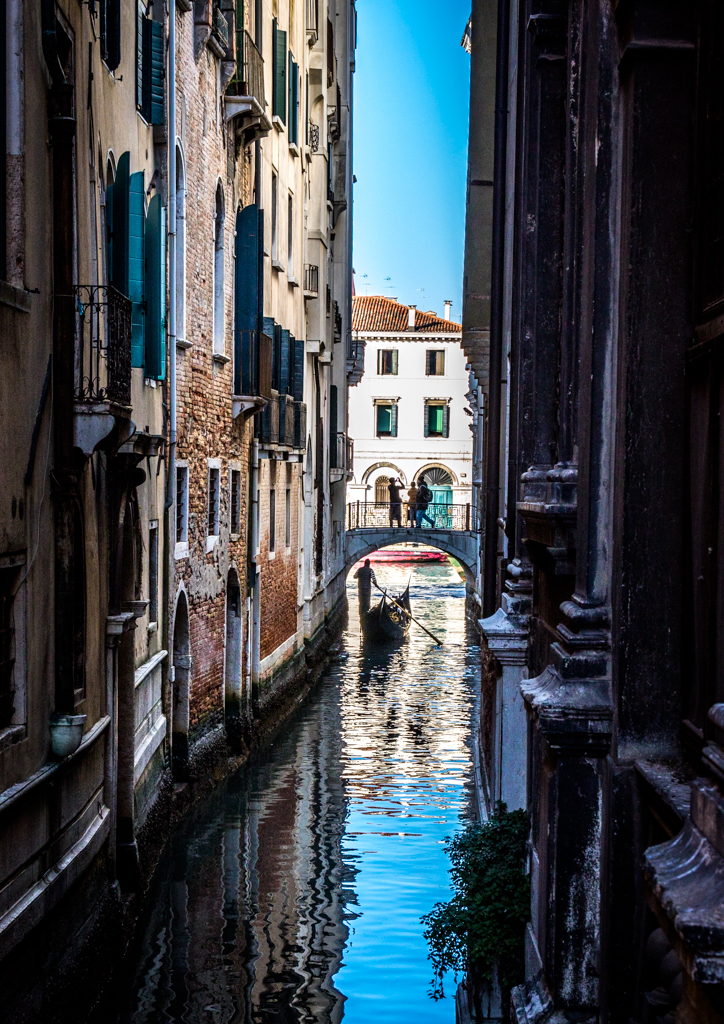
This was a tricky lighting situation in Venice, but the sensor has the dynamic range to cope.
What is the touch bar all about. I have never got mine to work. I think this is a feature that Canon will soon forget. The buttons on the EOS R are however fully customisable, so there is plenty of real estate to play with.
Some people will want to stick with an optical viewfinder, which is one reason why the Canon EOS 5 MKIV is still popular. I tend to forget that the EVF on the EOS R is an electronic viewfinder.
I love the fully articulating flippy touch screen which is great for street photography.
Older EF lenses can be converted to the R system using the EF-EOS R adapter. In my experience connecting to Canon EF lenses is seamless.
The control ring on all R lenses can be set to change the camera functions. I have mine set to exposure compensation so that through the EVF, I can judge the amount of light to suit the image. This bypasses the technology and returns some manual control and creativity to image making.
Spoiler Alert: We are going to talk about flange distances
The RF mount flange focal distance is just 20mm from the image sensor. This has given Canon lens designers a lot more flexibility.
According to Canon:
The rear element of RF lenses can be larger in diameter, improving image quality at the corners and outer edges of the frame. Larger rear elements mean front elements can be smaller, meaning less strong refracting and bending of light rays within the lens, enhancing optical performance.
We know how good Canon L lenses are, but they are expensive. Consider then the more affordable RF lenses, which because they are freer of the design constraints are excellent.
This is my review of the Canon RF 24-240mm lens and the Canon RF 35mm macro lens.
However, do not take my word for it, look at this review of the Canon RF 85mm f2 Macro (£649) vs RF 1.2 (£2799) vs EF 1.8. The top line is that the cheaper lens beats the other two, and the RF wins over the EF lens hands down.
To sum up the R system give you access to some fantastic quality but affordable lenses.
There is a summary of the specs of each camera here, but I have not seen the need to change to this second generation of the R series.
This is my thinking.
Yes, I would like in body stabilisation (IBIS), it should totally eliminate the need for a tripod. However, my lenses all have stabilisation, and the R is capable of shooting at incredible ISO’s with low noise, so do I really need it now.
The EOS R5 with a 45MP sensor size is too big. I don’t think I need it even though I crop a lot. I worry that the big file sizes could slow my workflow down to a crawl.
The EOS R6 21MP sensor is just a bit light. It works well in the Canon EOS 1DX Mk III, because sports and news photographers prefer smaller file sizes that can be streamed back from remote places on earth quickly.
The EOS R fits that Goldilocks category with a 30.3 CMOS sensor.
I have mentioned that the EOS R IMHO is over engineered for the price. I think Canon produced it as a loss leader to persuade Canon users to switch. As a result, the EOS R5 (£4199) and EOS R6 (£2499) which followed the EOS R are more realistically priced. This makes the EOS R real value for money at £1879.
The Canon EOS R is two years old now, and technology moves on, but it is an extraordinarily robust camera, that can cover most bases well. What matters to me is a camera that feels good, and that you can forget about, because you know it just works.
This is a camera that puts you in charge because you are confident that the images will look good
In 1979, Buggles lamented that Video Killed the Radio Star. Fortunately, this turned out to be premature. Today radio is still very much alive. Looking to the future, however, will we photographers look back and lament that it was software like Luminar AI that killed landscape photography.
Take a look at this short video about Luminar AI.
Just replace the sky, ‘with a more dramatic one’. ‘Add sunrays to make the image more interesting’. ‘A little mist to add atmosphere’. ‘Add lots of contrast’. ‘Automatically change all your images by applying an AI template’.
AI is changing photography.
Are the Luminar AI changes any different from what we do manually in post-processing, or do they represent a threat to the way we do our photography?
The debate around how we process images will I guess will run and run. I have never had any truck with those who insist on capturing the image, ‘in camera’. I love shooting in RAW and using Lightroom and Photoshop, to make images pop. Surely that is just bringing out the best from the image that was there? Better communicating what it was I saw on the day when the photograph was taken.
What I think I object to, is that with one click it is possible to homogenise all landscape photographs to look the same, and that is boring. It destroys authenticity and integrity. How quickly will it take us to get fed up with a sunrise. How do we know it was real? Was it there when the image was taken? Or did the photographer roll out of bed at mid-day?
The result will be a change in the way we look at landscape photography. We will no longer believe the perfect landscape. Take a look on any day at some of the popular landscapes on 500px. I can’t believe it’s not butter. So many landscapes with red skies, mist and reflections. Were they really captured that way? Or is it AI?
Is this the way photography is going? Ten years ago the same debate raged around Photoshop and now most of us photographers just love it. We also accept CGI in movies. So will we learn to live with AI?
I think so.
We are human, we will adapt, and because we are human we will learn to bend and control it. Afterall it will always be the creative input that is most important, and robots cannot replace that just yet!

This is my image of the month for September 2020. A message in a bottle. I am currently experimenting with a bolder oil painting style to try and achieve an image which is an oil and light hybrid.
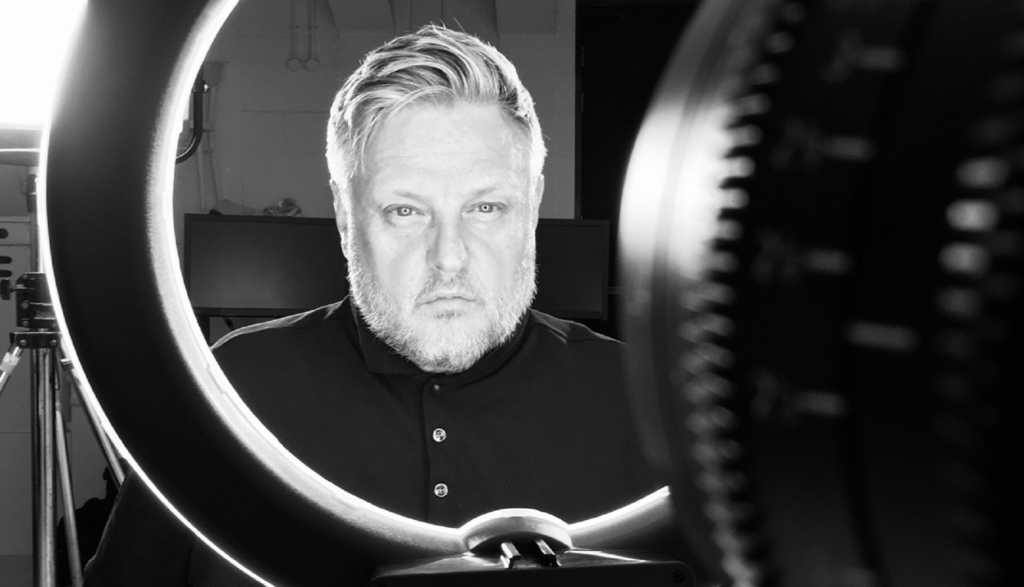
Rankin has a new show on Sky Arts, which reviews the results of a photography challenge launched in the summer to document life in 2020. In the programme, (Rankin’s 2020) Rankin demonstrates how he would tackle each assignment and with two guests reviews his images and their images.
Sky Arts is now a free-to-air channel on Freeview Channel 11.
There are six parts to the series. Each episode will focus on a different category – family, fun, self, beauty, empathy and nature.
Rankin is a renowned portrait photographer, who has now diversified into fashion, advertising and film. He is best known for working with models Kate Moss and Heidi Klum as well as photographing celebrities like Madonna, David Bowie and the Queen.
Rankin describes this project:
“Photography is my life and passion and I truly believe it has the power to reveal and connect. Now we all have cameras in our pockets, I think it’s time to use them. Rankin’s 2020 is an open call to anybody who thinks they can take a great picture. It doesn’t matter whether you’ve never taken a photograph before or you’re a professional, I want to see your view of our world. Together we can document this crazy year and make something positive out of it.”
There are now two photography based programmes on Sky Arts. I have reviewed Master of Photography, and I have watched the first episode of Rankin’s 2020. I enjoyed Rankin’s interpretation of empathy and seeing how he worked. The images submitted were also refreshing, in that they did not look like traditional photography competition entries. Many had been captured on a smartphone. They were alive, immediate and compelling.