• Home
  • Images of the Month
  • My Notes
  • About
  • Contact
    • Privacy Policy

iJourneys

John Gough Photography

Sony A7 III with Canon Lenses

by John Gough

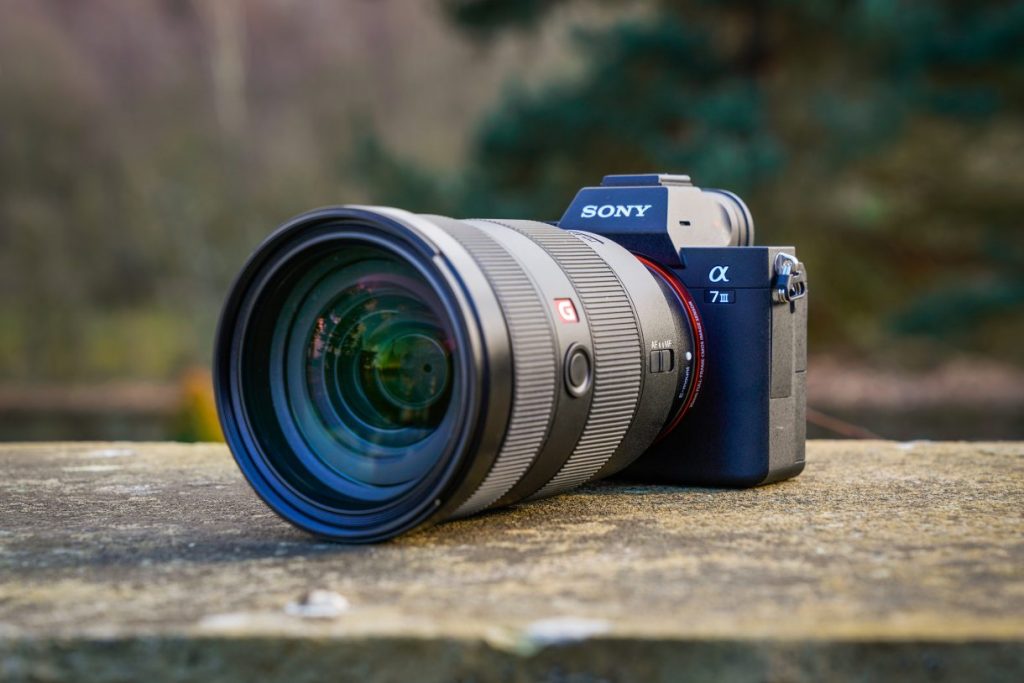
Sony A7 III

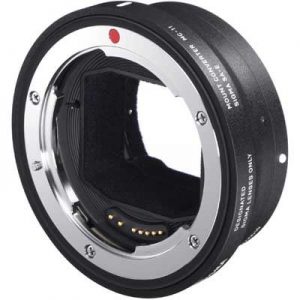
Sigma MC II Mount Canon Lens to Sony E Mount

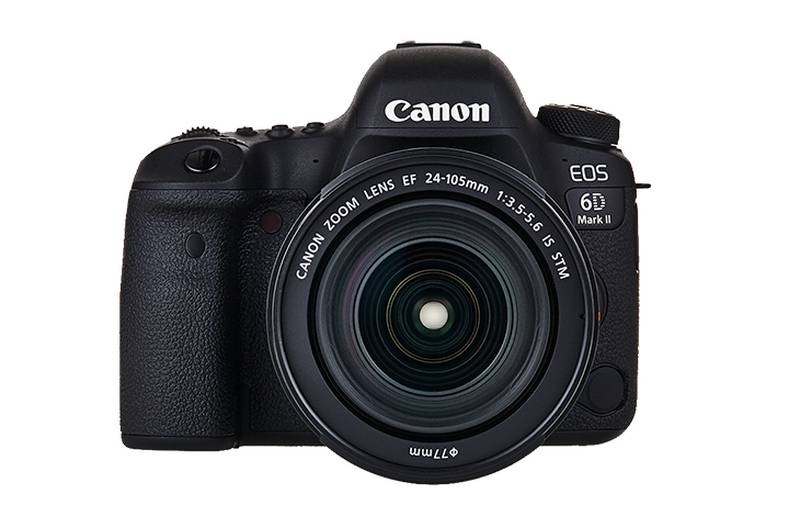
Following on from our review of the new Sony A7 III vs the Canon 6D II, it is so apparent that the Sony A7 III is a far more featured camera for the same original retail price as the Canon. So why if you had the choice would you go for the Canon instead?

One good reason is that the 6D II price is now falling faster than a Sumo’s jock strap. In the UK it can be bought at Wex for £1728 less £100 when using a Canon voucher. On the grey market, it is around £1169. In our review, we thought that was great value even for a flawed camera.

Another reason for sticking with Canon may be that you are not yet happy about moving to mirrorless.

  • Mirrorless or CSC cameras are lighter and smaller and so much easier to travel with. However, when you add big glass, that can add a lot of weight and reduce the advantage.
  • Electronic viewfinders on CSC cameras give a better representation of the final image, but it does not have that real optical look of a pentaprism.
  • CSC’s have no mirror to throw about so continuous shooting is way faster. If that is an important consideration? For many photographers 6.5 frames / second is sufficient.
  • With all that electronic wizardry CSC’s drain their batteries fast.

Major Reason for not Switching is Investment in Lenses

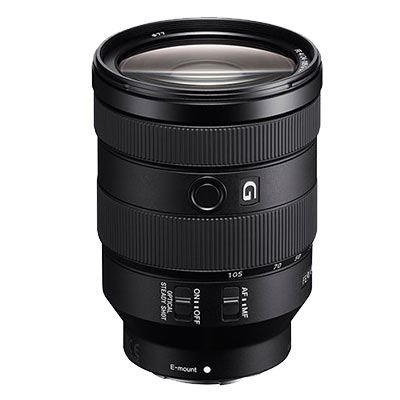
Probably the major reason for not switching to Sony is investment in Canon lenses. Yes, you could sell and buy Sony, but that is going to leave you further out of pocket, and the financial advantages switch back to Canon. So how about using Canon lenses on your new Sony camera. Sony has for a long time been an open platform when it comes to lenses. Many photographers use vintage lenses on Sony cameras to good effect.

This video is from Jason Lanier, who seems to have way too many lenses, but uses his largesse to good effect by demonstrating that his Canon lenses work fine with a Sony A7 III. The speed of autofocus is amazing.

The adapter being used is the Sigma MC II adapter which you can buy at Wex or Amazon


Being able to use Canon lenses on Sony cameras like the Sony A7 III, just seems like such common sense. Use the lenses you have and love, with a camera that in technology terms is light years ahead of what Canon is likely to offer in this segment of the market for a long time. Even then Sony may well have jumped ahead again with the Sony A7 IV!


Where I Buy

I buy my gear from Wex because I have experienced their amazing customer service.


Filed Under: Cameras, Canon Cameras, Equipment, Gear, Journey, Sony Tagged With: Canon Cameras, Sony Cameras

Sony a7 III vs Canon 6D Mark II

by John Gough

Sony a7 III

Sony has just announced the Sony a7 III. It is a mirrorless full frame camera aimed at the enthusiast, filling the same spot on the dial, and price point as the Canon 6D Mk II. What many reviewers said about the 6D2 when it launched a few months ago, was that it was a missed opportunity. Built down to a price and purposely excluding features available on their more professional cameras like the Canon 5D Mk III. Sony has however embraced the new technology they have available and made it available at this price point. Is the Sony a7 III the camera Canon should have introduced? Let’s have a look at how they compare:

Body

The Sony has a 650 gm magnesium alloy body, the Canon has a 765 gm magnesium alloy chassis with a polycarbonate body. Both are environmentally sealed.

Sensor & Processor

Both cameras are full frame. the Sony is 24 megapixels compared with 26 megapixels from Canon. Both cameras use the latest processors in their camera line up. The BIONZ X (Sony) and DIGIC 7 (Canon). The Exmor X sensor on the a7III provides a claimed 15 stop dynamic range.

Point and Shoot

The Sony a7 III is a mirrorless camera with an electronic viewfinder (EVF). The Canon is a DSLR with a traditional optical pentaprism. Both have 3″ touchscreens, the Canon fully articulates the Sony tilts only.

Stabilisation

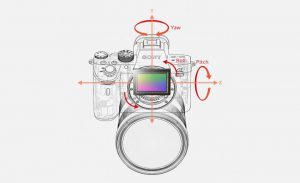
Sony Stabilisation

There is 5 axis stabilisation in the Sony a7 III which equates to avoiding camera shake by an additional 5 stops. In the 6D2 there is no in-camera stabilisation for still photography, but it is available for video. Both have image stabilised lenses.

Focusing

There are 693 focus points on the Sony. It is the system derived from the top of the range A9 with 425 contrast detection points. There are 45 cross-type AF points on the Canon. Sony has both face and eye recognition, Canon has face recognition.

Shutter

The Front End LSI pre-processor from the upmarket  Sony a7R III, is incorporated into this camera, taking the drive to 10 fps with big buffers for RAW files as well as JPEG. The Canon can reach 6.5 fps.

The maximum shutter speed is 1/8000th  and 1/4000th respectively.

Sony has 4K video, the Canon has Full HD

ISO

Sony ISO is 100-25,600 which can be boosted to 204,800. The Canon is 100-40,000 which can be boosted to 102,400.

Batteries and Cards

The Sony battery life is 610 shots (using the EVF) vs 1200 shots from Canon. The Sony has two card slots, the Canon has one.

Connectivity

Both have built-in wireless. Canon has GPS

Price

The Sony a7 III will be launched in April at $2000, the Canon 6D Mk ii was launched at $2000 but now retails for $1899.

Summary

Sony with a consumer electronics background is well used to developing new technology, and looking to the market (the new Fujifilm X-H1 for example) to lead new product development. This provides great value for consumers, who in the Sony a7 III gain a cutting edge at a bargain price. Canon is more introspective, used to a two-horse race with Nikon. For them, it is more about just keeping up. However, Canon may soon find this is not enough.

Where to Buy

I buy my equipment from Wex because I have found they offer great customer service.


Filed Under: Cameras, Canon Cameras, Gear, Journey, Mirrorless, Sony Tagged With: Canon Cameras, Sony Cameras

Will the Smartphone Camera Replace the Camera?

by John Gough


At Bedford Camera Club there is going to be a photography competition next month. Not using cameras but smartphones. It will be the first in the club’s long history. Probably even a few years ago it would have seemed bizarre that the smartphone camera could replace a ‘proper camera’.

The smartphone camera has now all but replaced the point and shoot camera. This is a disruptive technology that the likes of Nikon and Canon did not see coming. You cannot take a selfie with a Canon IXUS.

Smartphone Cameras Are Good and Getting Better

DxOMark has recently published a report on the development of smartphone cameras, which demonstrates just how far image quality has improved.

Disruptive technologies in mobile imaging: Taking smartphone cameras to the next level

The key technologies are:

  • Sensor size is restricted due to space constraints. However, image quality has been improved through the use of image stabilisation and longer exposures.
  • Temporal  Noise Reduction (TNR) combines the data from several frames to increase detail and decrease noise.
  • Scene analysis algorithms detect backlit subjects and other tricky lighting situations.
  • Auto HDR lifts the detail in shadows
  • Phase detection autofocus (PDAF) combines two images to find perfect focus
  • Dual pixels make systems less susceptible to noise and improve IQ in low light conditions.
  • Dual cameras with secondary telephoto lenses make optical zoom possible

DSLRs and mirrorless system cameras are still clearly ahead in some areas, but in terms of image processing, Canon, Nikon, Pentax, and the other players in the DSC market are behind what Apple, Samsung, Google, and Huawei can do. Thanks to their hardware advantages, the larger cameras don’t actually need the same level of pixel processing as smartphones to produce great images, but there is no denying that the performance gap between smartphones and DSLRs is narrowing. DxOMark

The Smartphone Camera is One Integrated Device

The ability to shoot, edit and share photographs on one device is a big advantage to some professional photographers. I have created a selection of professional smartphone camera images here.

Why do some professional photographers prefer the smartphone to say a traditional DSLR?

helps your subject to be at ease with you. Most of the people I meet are amazed and curious that I use such a small device to capture photos instead of a DSLR or a rangefinder AikBeng Chia

not only is it the camera in my hand, but it’s the printing press in my pocket and more importantly, with the rise of social networks like Instagram, it’s become my satellite dish in order to instantly transmit, globally. I can share my vision at the touch of a button and receive instant feedback Richard ‘Koci’ Hernandez

the camera I always have in my pocket has shown me more small miracles, more tiny details, than I ever thought possible Robert-Paul Jansen

using just the iPhone and any number of great photography apps, the stranger/street portrait enters a whole new level. I love the spontaneity and the quick relationship that exists between me and the subject Jim Darling

There’s no doubt that a camera with a full-frame sensor will produce technically better images than a smartphone, but the resulting photographs depend much more on the hands that camera is resting in, and the perspective of the person hitting the shutter. And in the end, it’s the photographs – not the camera – that matter most. Carey Rose

Stephen Soderbergh whose films include Erin Brockovich, Traffic, and Ocean’s Eleven has even shot his latest film Unsane on an iPhone. See above.

People forget, this is a 4k capture. I’ve seen it 40 feet tall. It looks like velvet.This is a gamechanger to me.

The Great Divide

Soderbergh is correct, smartphone camera photography and filmmaking will be a game changer. It used to be that people took photographs on phone, point and shoot, bridge, mirrorless and DSLR cameras. Now, most people use a smartphone, and the rest a few enthusiasts, hobbyists and professionals use the expensive kit. Camera manufacturers are complacent if they think this trend will continue. Canon, have the impression that they still dominate, attempting to get away with launching a premium camera like the Canon EOS 6DMkII without even 4K video.

Innovation is being led by Apple and Samsung, and increasingly professionals and enthusiasts will follow.


Where to Buy Your Equipment

I buy my equipment from Wex because of their exceptional customer service. I once returned a camera after 30 days, and the next day they called to return my money to my account. Their prices are always competitive and they offer good prices on the trade in of your used gear.

Filed Under: Cameras, Canon Cameras, Equipment, Gear, Journey Tagged With: Smartphone

Canon EOS 6D Mark II Review of Reviews

by John Gough

Canon EOS 6D Mark II


When the Canon EOS 6D was launched, it was a massively popular camera, full frame detail, and brilliance at a price the enthusiast could afford. In August 2017 after a five year wait, it’s successor the Canon EOS 6D Mark II was launched, and frankly, it was a disappointment. Does this camera deserve the slating it has had? Is this camera as poor as critics have made out? Let’s look at the reviews to try to understand what went wrong, and try to understand whether the doom merchants were proved right.

In July last year, the wait was over the 6DII which had been heavily trailed on Canon rumour sites and forums was finally released.

Canon EOS 6D Mark II: Digital Trends Review

Digital Trends was one of the first to review the camera based on a Canon sponsored trip to the Grand Canyon to test beta models prior to release. They were impressed by the new spec’ compared with the old Canon EOS 6D.

  • Digic 7 processor vs Digic 5 in the 6D.
  • An all new 26.2 megapixel full-frame sensor vs a 20 megapixel full frame sensor
  • ISO increased from 25,600 to 40,000
  • Burst rate from 4.5 frames per second (fps) to 6.5.
  • GPS is built in for automatic geotagging without requiring a mobile app as in the 6D
  • The 6D 11 point AF system with one cross-type sensor, is replaced by a 45 point all cross type AF sensor
  • New Dual Pixel autofocus (DPAF) technology
  • New articulating three-inch touchscreen with a 1.4-million dot resolution.

However, they were disappointed that there was no 4K video. Furthermore, despite Canon’s hospitality, there were already the first hints of the disenchantment to come:

After waiting some four-and-half years, it would have been nice to see the 6D take a bigger leap forward, rather than just play catch up to the rest of the product line.

Canon EOS 6D Mark II: Pocket-Lint Review

Pocket-lint were one of the next reviewers on the block. They praised the versatility of the camera, especially with the articulating screen and pointed out how light the camera was compared to the 5D IV, and Nikon.

They were impressed:

  • The 6D 75g is lighter than the Nikon D750.
  • The Dual Pixel AF technology = fast focusing
  • The 7560 RGB+IR metering sensor performed well
  • There was now Bluetooth

However, it was mixed with reservations:

  • The viewfinder only covers 98% field of view, meaning you are likely to be cropping the edges. With the 5D IV it is a 100% field of view.
  • There are 45 autofocus points all cross type, more than the 11 with just one cross type in the 6D, but less than the 61 in the 5D IV.
  • The burst rate of 6.5fps is half a frame slower than the 5D IV.
  • There is only one card slot compared to two on the 5D IV. An annoying restriction for wedding and professional photographers.

At launch, there was around one thousand pounds difference in price between the Canon EOS 6D II, and the Canon EOS 5D IV. However, the reviewers questioned whether for all customers the additional £1000 was worth the few additional features.

For many it will fulfill every need at a far lower price than buying a 5D Mark IV, which gives this full-framer considerable appeal.

Canon EOS Mark II: Ken Rockwell

I respect Ken Rockwell. His reviews are detailed, and he seems to be dead straight, there are none of the current biases e.g. mirrorless vs DSLR, Canon vs Nikon vs Sony, Fujifilm vs the world. I bought the Canon 6D based on his recommendation, so what are his views and comments about the 6DII.

  • The image quality is the same, but it may take more time and trouble to change settings than with more expensive cameras.
  • The 6DII is light compared with Sony’s top full-frame mirrorless cameras which aren’t much lighter.
  • High quality domestic Japanese production, not offshored to China or Thailand like Sony or Nikon.
  • There is no facial recognition, which now comes as standard with most mirrorless cameras
  • There is at least some weather sealing
  • “The rubbery grip material is the best in the industry. It’s super grippy, yet firm. It’s as if it’s made of the same nanomaterial as the footpads of a lizard that grip anything without being sticky”
  • Ken Rockwell has shot the same scene at various ISOs and his conclusion is that the high ISO performance is state of the art and matches other current full-frame cameras like the Sony A7R Mk III.

The review is summed up by some encouraging words.

The original Canon 6D has always been the world’s best low-cost full-frame DSLR, and this new 6D Mark II is even better.

The 6D Mk II is excellent for most DSLR uses like landscapes, however for people pictures I prefer a camera with facial recognition for regular viewfinder shooting, like a mirrorless camera or a higher-end Canon DSLR.

Canon EOS Mark II: Dpreview

Dpreview is another respected source. Here are some of their views and comments that we have not picked up in previous reviews:

  • There is face detect in Live View using the articulated screen rather than the viewfinder.
  •  Not having a flash is not a big disadvantage because the high ISO performance is so good.
  • Canon’s metering system tends to underexpose backlit shots.
  • Subject tracking AF is not up with the best, meaning that there could be some out of focus shots in the middle of a burst
  • The 45 point AF is centred, which can be a disadvantage if you want to compose off centre.

However, the review picks up on the main flaw in the 6DII, which is that the new 26 megapixel sensor is not sensitive at low ISOs especially in terms of dynamic range, which means that recovering detail from dark shadow in RAW is compromised. Images appear noisy which means that the flexibility you might expect in post processing is not there.  Tests by Dpreview show that it is the new sensor that is adding the noise. They conclude that:

the benefits that appeared in the sensors used in the EOS 80D and EOS 5D IV have not been applied to the latest EOS 6D

Sensor performance they claim falls well behind competitors and is no better than the original 6D. So in conclusion:

Let’s be clear: The EOS 6D Mark II is, like so many other cameras, capable of outstanding images in the right hands. But even considering all the traditional Canon bonuses like great color, ease of use for video capture and comprehensive lens ecosystem, the 6D II falls too far short for us to recommend it over the competition, and therefore it doesn’t merit our highest awards.

Canon EOS Mark II: DXOMARK

For definitive laboratory type sensor testing go to DXOMARK.

Picture quality is based on two factors, sensor quality and the quality of the lens you can afford. Here we are looking at one half of the equation. DXOMARK give an overall mark based on their tests of sensor performance. The Canon 6DII gets a score of 85. By comparison, other Canon full frame cameras get a higher score due to their more advanced sensors.  The Canon EOS 1D x Mark II launched in 2016 scores 88, and the Canon EOS 5D MarkIV scores 91. Canon has the technology, but chose not to use it on the 6DII.

In 2012 when the 6D was launched the major competition came from Nikon, but times have changed. Now even the Sony a6300 which is not even full frame, but an APS-C format sensor, scores 85. The full frame Sony A7R launched in 2013 and now priced well below the 6DII scores a whopping 95, and it’s successor the Sony A7R III scores an even more whopping 100. Imagine that with the latest Sony G glass. Read about it.

However, lets leave the last word on the sensor to DXOMARK:

[The score] is a result of notably lower dynamic range recorded by the 6D Mark II at base ISO, which is a concern for photographers after the best image quality in good light. From ISO 800, dynamic range is much closer to the performance of semi pro rivals such as the Nikon D750 and Sony A7 II however, and with good color sensitivity at all settings and well-controlled noise the 6D Mark II lends itself better to low light photography.

Canon EOS 6D Mark II: Conclusion

The 6DII was never going to be a sports or a wildlife camera, the burst rate is too slow and the AF too clunky to follow the action. As a people shooting camera, the lack of face recognition and the centre positioned auto focus make it difficult to use creatively. However, the camera is on paper ideal for landscape and nature, the higher resolution full frame sensor, the weather sealing, and the flippy screen make working on a tripod a breeze. However, lift the hood and the engine has not got the grunt in terms of dynamic range that serious RAW landscape and nature photographers might expect.

Canon EOS 6D Mark II: The Good News and the Bad News

However, in reviewing the 6DII there is good news and bad news. Let’s get the bad news out of the way first. Canon have been too cautious with the 6DII. Keeping it purposely not quite as good as the 5DIV to maintain parity across the product line. The 6DII has taken 5 years to develop and was designed by a committee. During which time it was overtaken by the likes of Sony, and their old rival Nikon, with the matchless Nikon D850.   

Now for the good news. The bad press has actually turned the situation around, and as a result the price of the 6DII is falling. At launch, the purchase price in the UK was £1999. The current price at the time of writing (Jan 2018) is £1728, compared with the Canon 5DIV, which is now almost twice the price at £3229.

If you shop around you can get the 6DII for an amazing £1185.  Ok, the 6DII is a flawed camera, but at that price, it is a great camera.

Where to Buy

I buy all my equipment at Wex because they have great customer service


Filed Under: Cameras, Canon Cameras, Gear, Journey Tagged With: Canon Cameras

Sony 18-105 f4 G OSS Lens Review of Reviews

by John Gough

Sony 18-105

Sony 18-105 f4 G OSS

This is an analysis of the reviews for the Sony a6300 e-mount lens, the Sony 18-105 f4 G OSS.

There are not a huge array of lenses to fit the Sony e-mount. It is therefore worth investigating the Sony 18-105, which has a useful focal range for general, travel and landscape photography, and costs less than £500.

A Summary of the Reviews

  • Not that fast but OSS makes up for 2 to 3 stops
  • Reasonably sharp and almost outstanding.
  • Some image quality flaws but nothing that cannot be ironed out in camera for JPEG and in post with RAW
  • Too big for mirrorless ethos but nicely balanced on camera
  • Not a Zeiss lens but has the look and feel of one.
  • After all it is a Sony G lens at a reasonable price.

Sony 18-105 f4 G OSS Lens Reviews

Ken Rockwell

Always speaks sense. I have a lot of time for his reviews. This is his review of the lens.

These are my notes:

  • Not as really sharp as most DSLR or Zeiss mirrorless lenses today, but the lens is more than adequate
  • The zoom ring connects to the camera’s computer system. The disadvantage of this is that you can’t just twist the ring to go immediately from one end to the other; you always have to wait for it to motor in or out.
  • Bokeh is good at the long end where it matters
  • There is minor to strong barrel distortion, but this can be easily corrected in Lightroom or Photoshop
  • Zooming is controlled by a motor which is much slower than a real mechanical zoom ring for shooting stills, but is much smoother for shooting video
  • Size defeats the point of a mirrorless camera. If you don’t mind carrying it, does everything in just one lens at a reasonable price.

The Phoblographer

Plain speaking, with good selection of sample shots. This is the review of the lens

These are my notes:

  • ‘The image quality is really where you’ll become smitten with it’
  • The lens is internal zooming
  • The exterior is smooth and Zeiss like, but there is no weather sealing
  • ‘for element image quality, the Sony 18-105mm f4 G OSS has to be the single best lens that we’ve seen for the system’s APS-C cameras’
  • Sharpness is best at above f6.3
  • Big for a mirrorless camera
  • Editors Choice

EPhotozine

Lots of detail with a few charts. This is the review of the lens.

These are my notes:

  • ‘Despite the large size of this lens, it is reasonably light weight, weighing only 427g’,
  • Manual focus is smooth and nicely damped
  • ‘For those times when slow shutter speeds are necessary, this lens comes equipped with optical image stabilisation. With care, sharp hand-held images can be taken at shutter speeds as slow as 1/20sec, which is roughly three stops slower than the usual rule of thumb for hand-held photography would allow’.
  • Sharpness at the centre of the frame is ‘outstanding’ through the range. Poor performance at the edge of the frame especially at 105mm

DXOMark

Sony E PZ 18-105mm F4 G OSS lens review: Attractive option

The go to site for lens performance.  The Sony 18-105 scores 15. This is ahead of all the other zoom lenses available for Sony e mount in 2015. With the exception of the Sony Vario-Tessar T* E 16-70mm F4 ZA OSS which is a Zeiss lens and scored 17.

Admiring Light

The editor Jordan Steele now shoots entirely mirrorless with Sony, Fuji and Olympus kit

http://admiringlight.com/blog/review-sony-e-pz-18-105mm-f4-g-oss/

These are my notes:

  • ‘The one down side to the power zoom implementation is that it sets itself to a ‘park’ position (somewhere in the middle of the zoom range) when you turn off the camera, and then resets itself to 18mm when the camera is turned on.  It would be nice if the camera could remember the last zoom position and reset to that position when powering on’.
  • The front element of the lens is hard to clean, and although UV filters are going out of vogue, fit one.

Where to Buy Your Equipment

I buy my equipment from Wex because of their exceptional customer service. I once returned a camera after 30 days, and the next day they called to return my money to my account. Their prices are always competitive and they offer good prices on the trade in of your used gear.


Filed Under: Equipment, Gear, Journey, Sony Tagged With: Sony Cameras

Important Get a Camera Wrist Strap

by John Gough

Camera Wrist Strap

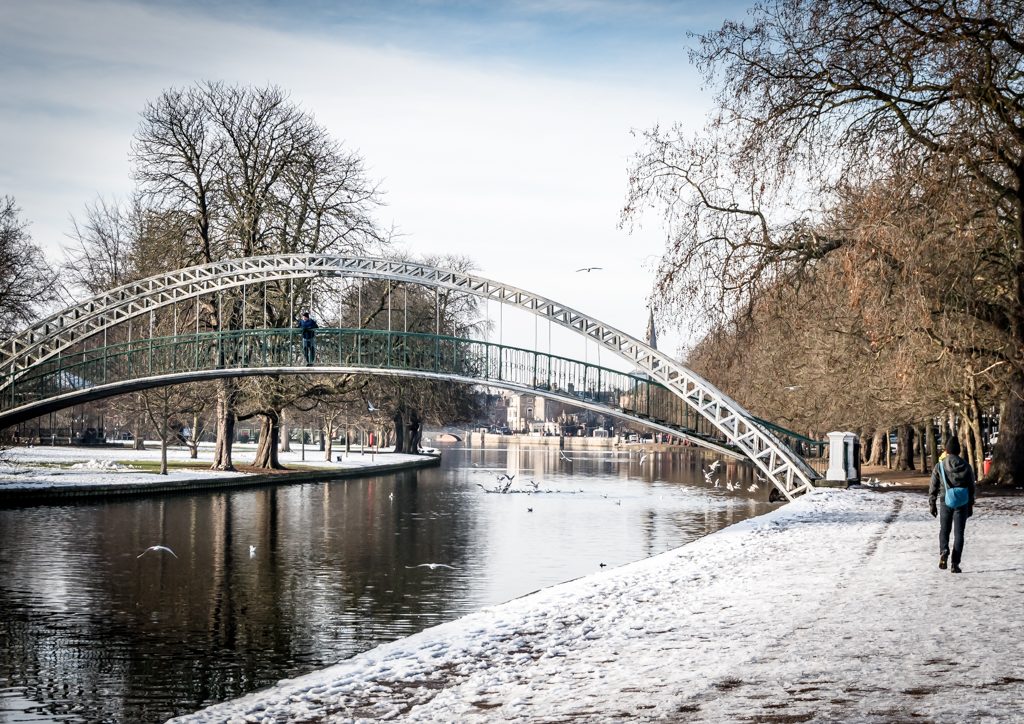
Suspension Bridge / John Gough / Sony a6300

Yesterday I was shooting both urban and landscape using the Sony a6300. Shooting on the busy street I was holding my camera. I was jostled and the camera fell out of my hand.

Later I was on this bridge. I slipped on the ice and dropped the camera. It was in the river.

Camera Wrist Strap

Or would have been, if the camera had not been tethered to my wrist with a strong wrist strap. Two incidents in one day, which without the camera wrist strap, could have ended up as a very expensive day out.

Mirrorless cameras are small and light so a neck strap seems unnecessary. Plus if you are into street photography a big neck strap with the manufacturer’s logo, is just too conspicuous.

The wrist strap I use is this Mayveek paracord lanyard, but there are lots of different types on Amazon. This wrist strap, however grips your wrist securely and incorporates a sturdy quick release clip

To attach the wrist strap to the camera, I use these Op Tech System Connectors, which on my DSLR enables me to quickly switch between a camera wrist strap or neck strap.

A camera wrist strap  is probably the cheapest accessory you will ever buy, but it could end up saving you thousands.

Filed Under: Equipment, Gear, Journey

Fujifilm X-Trans Sensor Problems

by John Gough

I just wanted to add to the debate about the Fujifilm X-Trans sensor which is the APSC sensor used in Fujifilm X series cameras like the XT2, XT20 and XPro2.

The debate which rages on countless forums, centres around the artefacts that can be found on RAW files after they have been processed in Lightroom. Photographers claim that there can be worm like backgrounds and smeary images on high ISO images. Other Fuji users claim never to have come across this problem. Well I did.

Examples of X-Trans Sensor Problems

Here are a couple of examples shown at high magnification taken on a Fuji XT20 at just ISO640.

X-Trans

X-Trans Sensor Worms


X-Trans

X-Trans Smears

Although the sensor is claimed to be 24 MP, and that size of sensor should be able to create up to a c’3′ x 2′ print. I would not like to rely on it if details like these were  evident. Therefore creating fine art prints with this camera is not going to be possible.

The Technicalities: Fuji X-Trans Sensor

To understand the technicalities of why this is. Then refer to this excellent article.

https://petapixel.com/2017/01/27/x-trans-promise-problem/


Conclusion

The answer to the problem many people argue in forums is not to process Fujifim X-Trans images in Lightroom, users suggest instead to use  Capture One. Surely however, there is something seriously wrong when one of the world’s most popular cameras, can not use the world’s most popular processing engine and workflow.


Where to Buy Your Equipment

I buy my equipment from Wex because of their exceptional customer service. I once returned a camera after 30 days, and the next day they called to return my money to my account. Their prices are always competitive and they offer good prices on the trade in of your used gear


Filed Under: Fujifilm, Gear, Lightroom Tagged With: Fuji Cameras

Sony A6300 Image Quality

by John Gough

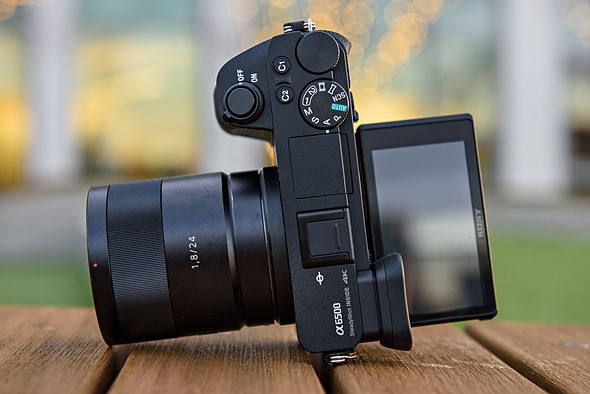
Sony A6500


I was looking to do some sensor comparisons and headed off to this fantastic site.

I have been researching Sony A6000 cameras for a bit now, because I am looking for the ultimate street camera. I did have a Fuji XT20 but I had to send that back to Wex because the AF was dire. See how I tried to overcome the problem.  Can I just mention that Wex were fantastic and their customer service is second to none.

However back to the Sony 6300. At DXOMARK they measure the image quality of camera sensors, this covers colour sensitivity, noise including dynamic range and tonal range, and ISO sensitivity. The Sony 6300 and Sony 6500 have a score of 85. 

This is on par with the Canon 6D MK2. The prestigious  Canon EOS-1D X Mark II scores 88, the Canon 5D MKIV 91, and the extraordinary new Nikon D850 scores 100. The list here is dominated by Nikon, Sony and to a lesser extent Canon.

Sensor Comparison Mirrorless Cameras

So how about the competitor mirrorless cameras (priced at around £1000), how do they compare with the Sony A6300 score of 85. Unfortunately there are no recent Fujifilm cameras in the list (I wonder why?)

Samsung NX 500                                          87

Olympus OM-D E-M1 Mark II                     80

Canon EOS M6                                              78

Canon EOS M5                                              77

Panasonic Lumix DMC-GX8                        75

Leica T                                                           75

Olympus PEN-F                                            74

Olympus OM-D E-M5 Mark II                     73

It is interesting reading reviews in which reviewers use their own image quality tests, but on this site it is completely impartial. The numbers do the talking.


Where to Buy Your Equipment

I buy my equipment from Wex because of their exceptional customer service. I once returned a camera after 30 days, and the next day they called to return my money to my account. Their prices are always competitive and they offer good prices on the trade in of your used gear


Filed Under: Cameras, Gear, Sony Tagged With: Sony Cameras

Sony a6300 Review of Reviews

by John Gough

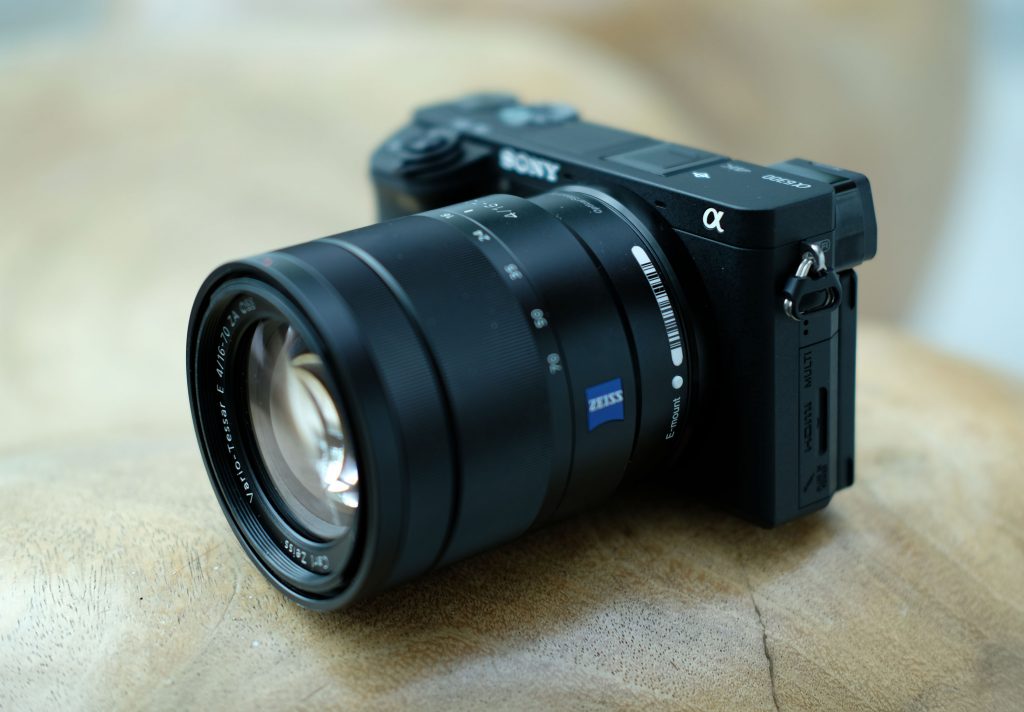
Sony a6300

Sony a6300 with Sony Vario-Tessar T E 16-70mm F4 ZA OSS


The Sony a6300 seems like a good candidate as a great street camera. I have pulled together the best reviews and drawn some conclusions.

DPREVIEW

  • Likely that Sony have retooled to create the a6300, because although it looks like the a6000, it has a more substantial-feeling magnesium alloy construction compared to the composite materials in the a6000 which it supersedes.
  • The menu system is complicated and is beginning to be overwhelmed by the number of functions it contains.
  • Can successfully shoot at 11fps and 8fps with a simultaneous live view
  • Constrained by a relatively small selection of lenses.
  • The AF point can be difficult to position.
  • RAW files have good dynamic range.
  • ‘The a6300’s image quality is excellent – as good as any we’ve seen from an APS-C camera of any type, from any manufacturer’.
  • ‘dynamic range and noise performance of the sensor are as good as things get in an APS-C camera’.
  • ‘If you’re looking for a camera with great image quality, excellent autofocus and top-notch video, it’s the strongest all-rounder’.
  • ‘Overall, then, the [Sony] a6300 is a camera where you benefit from putting in the work required to get the best out of it. It’s worth it, though, since it’s probably the most capable stills/video camera I’ve ever used. If the lenses you want are available, unless you really need a specific feature of one of its rivals, it should be at or very near the top of your list’.

Ken Rockwell

  • ‘I love its EVF, speed, tiny size, tough build and great looking pictures in any light — as well as its completely silent operation’
  • The EVF works flawlessly whatever lighting condition.
  • The silent mode is a considerable benefit
  • ‘Once you get the camera set it works very fast, but getting it set can be maddening since important menu options are carelessly spread all over its arbitrary menu system. Expect to wade through the entire system every time you want to find something. It takes a long time to learn this camera’.
  • If you dont get a sharp image with this camera it is because you are doing something wrong.

TechRadar

  • ‘425 phase-detect AF pixels that reach almost to the peripheries of the frame. This is the highest number of phase-detect points we’ve seen on an interchangeable-lens camera to date, and this density, together with 169 additional contrast-detect points, is said to enable the camera to focus on moving subjects in as little as 0.05 seconds’.
  • ‘Dynamic range in raw files starts at a reasonable level, although by ISO400 this starts to slip, and at the highest settings performance from the Panasonic GX8 and Olympus Pen-F is considerably stronger’.
  • ‘In the absence of any significant failings, it’s only really a handful of smaller shortcomings that let the A6300 down. The screen feels somewhat underpowered; some of the controls aren’t quite as accessible as they could be; and the lack of in-camera raw processing is a shame. Furthermore, while the tiltable LCD is great, it’s shame it’s not a touchscreen’.
  • ‘Sony A6300 represents an exceptional value for a camera which offers so much in such a compact package. It packs one heck of a punch in both features and performance, and undoubtedly gets two thumbs up as a Dave’s Pick‘.

Filed Under: Cameras, Gear, Sony, Sony a6300 Tagged With: Sony Cameras

Sony a6000 for Street Photography

by John Gough

Sony a6300

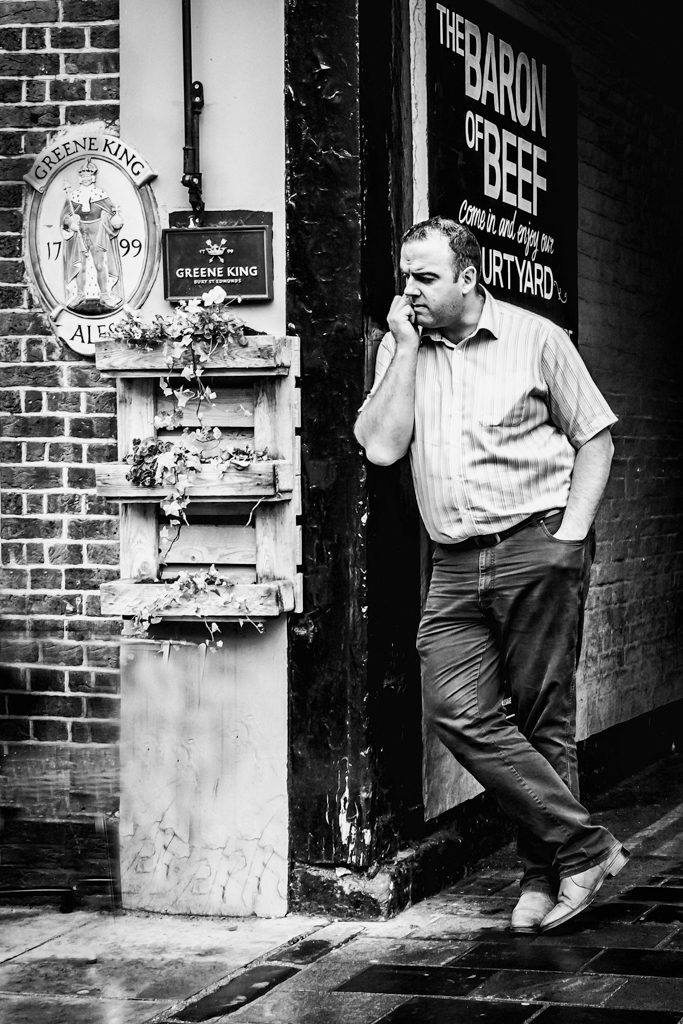
The Baron of Beef / John Gough / Sony a6300

I am researching what the Sony a6000 and its’ derivatives the a6300 and a6500 are like at street photography. Not so long ago (well 60 years ago) you set forth into the streets of New York. (See Joel Meyerwitz) with Leica in hand. Now we are all striving to be street photographers, and there are lots of alternatives to a Leica. These include the mirrorless Sony, Fuji, Panasonic and Canon cameras. But how good are they? Concentrating on the Sony a6000s, here are some views from some street photography bloggers: Thomas Fitzgerald Photography
The big advantages of the A6000 for street photography are as follows:
    1. It’s really fast in operation. The camera responds quickly and you are never left waiting for it to catch up, which can be an issue with some older mirrorless cameras, especially in this price range.
    2. The flip up screen is great for shooting from the hip. It’s great for being stealthy when shooting on the street.
    3. The autofocus is superb. It’s still one of the better autofocus systems that I’ve used on a mirrorless camera. I find it better than my X-Pro 2 for autofocusing (send your hate mail to….) especially when shooting street photography. It’s very fast and it locks on really quickly. Also, the face detection works well, and is a really useful option when shooting street shots.
    4. It’s really small and discrete. When coupled with a small lens it’s not much bigger than a compact camera.
    5. You can adapt it to an incredibly wide range of lenses (pretty much anything). While it doesn’t autofocus with adaptors as well as the newer A6500, if you’re willing to manual focus, and have old glass, there is more than likely an adaptor for it. And some of these adaptors are pretty cheap too.
Steven Brokaw Photography
There are MANY reviews on the A6000 focusing on features & performance, so I won’t try to do one myself.  I would recommend if you are looking at an ILC for street then check out the online reviews, blogs and go to your local camera store to get the feel of the Sony A6000. However, I did want to highlight what I liked about the camera.  They are:
  • Lighting fast focus,
  • Easy to use menus & menu layout,
  • Fine lineup of Sony lenses and readily available adapters for non Sony lenses,
  • Focus tracking is awesome,
  • Burst rate is stupid fast,
  • OK (but, not great) low light performance,
  • Feels good in my hand (very sticky),
  • APS-C sensor,
  • Good video,
Crazyaboutcameras http://crazyaboutcameras.com/best-cameras-for-street-photography/

The main benefit of the a6000 is its portable size. The ability to put a camera in a coat pocket and take it out everywhere with you is not to be underestimated. Especially with street photography where you may want to be discreet.

But apart from the portability, we are just amazed by the image quality that a camera of this size can produce. The a6000s sensor is incredible and is widely regarded as being one of the best in this “size class” of cameras. It picks up colors well and the processor that powers the whole product can accurately adjust the balance on auto mode.

Some other cameras without a digital viewfinder can struggle in bright lighting conditions making the shot reasonably difficult (or impossible) to take. The OLED viewfinder on the a6000 makes it well suited to shooting in bright conditions. It is perfect for the street where you never know when the next shot might arise.

Tim Brookes MakeUseOf http://www.makeuseof.com/tag/mirrorless-cameras-great-street-candid-shy-photographers/
For street photography, this matters. As someone who’s always been a bit shy when it comes to pointing a camera in people’s faces, a smaller and more discreet camera allowed me to get closer and push myself further than an SLR ever has. The amazing thing is that modern mirrorless cameras don’t require you to sacrifice image quality — I’ve been shooting 24.2 megapixel images in RAW format images in RAW format and the excellent low-light performance and 425 points of autofocus on the A6300 allowed me to trust the camera completely. Aforementioned street photographer Eric Kim notes that “ultimately capturing the moment, emotion, and feeling of a scene is more important than how many pixels or how sharp it is.” This could apply to a whole manner of photographic applications, but it’s especially true for street photographers and anyone who wants to get into candid photography. Kim’s top pick for a dedicated street camera is the Richoh GR-II, a compact camera with a fixed lens and an APS-C sensor that retails for around $700.

Considering the flexibility offered by an interchangeable system, Sony’s A6000 is cheaper and ultimately more versatile. The newer A6300 has a groundbreaking autofocus system and full silent shooting for around $1,150 with a kit lens. These are easily two of the best mirrorless cameras on the market in terms of value for money, raw performance, and overall size — so be sure to check them out if you’re planning your next move as a photographer.

The Phoblographer
Review: Sony a6300
In many ways the Sony a6300 is an excellent camera. Great image quality, very versatile RAW files, a small size, great autofocus, and more. What more could you possibly ask for? My qualms with it have to do with the fact that the high ISO output is starting to fall behind the competitor and that I genuinely feel like the ergonomics need to take a step up at this point. Otherwise, it’s a very solid camera.
It is interesting gaining the views of actual users. The Sony a6xxx have fantastic autofocus, good IQ and are small and discrete, ideal for street work. May also have to invest in some primes. the Sigma 30mm 1.4 looks a good option very highly rated by DPReview. Plus a top tip,  if the 30mm is too tight then take a few pictures and stitch together in Lightroom

Where to Buy Your Equipment

I buy my equipment from Wex because of their exceptional customer service. I once returned a camera after 30 days, and the next day they called to return my money to my account. Their prices are always competitive and they offer good prices on the trade in of your used gear

Camera Wrist Strap

I have avoided dropping my camera so many times using a simple inexpensive wrist strap like this one. Cameras and expensive lenses do not bounce! UK USA

Filed Under: Cameras, Gear, Mirrorless, Sony, Street Photography Tagged With: Sony Cameras

« Previous Page
Next Page »
Copyright: John Gough 2025