• Home
  • Images of the Month
  • My Notes
  • About
  • Contact
    • Privacy Policy

iJourneys

John Gough Photography

Mirrorless Full Frame Cameras. The Race is On.

by John Gough

Start / John Gough / Sony a6300

A couple of YouTube videos have described the state of the interchangeable lens camera market as ‘Mirrorless Wars’. However, this is a misnomer it is not a war but a race, and the big players have yet to start.

The Race

To recap. The Sony launch of the Sony a7III was a gamechanger. A mirrorless full frame camera for £2000 packed with technology. It has been hailed as stunning by all who reviewed it. At a time when sales of DSLR’s are steadily declining, the a7III is now the best selling camera in the United States. Sony has taken on the goliaths of the pro/enthusiast market: Nikon and Canon and made deep inroads into a territory, they thought was theirs by divine right.

Sony is throwing down the gauntlet, challenging both Nikon and Canon to have a go. Nikon has responded. This week they will announce two mirrorless full frame cameras to challenge Sony. Commentators think a war will break out, with creaky old Nikon pulling a fast one and suddenly bettering the Sony offer.

What we have is no war, it is not even a battle, a fight or a skirmish. It is a race. If it were a Grand Prix, Sony would be laps ahead with a range of brilliant mirrorless full frame cameras and lenses.  Nikon would have a car that is ready to go, but must be sensationally fast to beat the best. We will see on Thursday. Canon is meanwhile working in the pits, but no one knows on what. Olympus and Fujifilm are chatting in the stands, keeping a safe distance, waiting and hoping that their loyal supporters will stick with their micro four thirds, and APS-C offerings. Click here to make sense of that statement.

Talking Flanges

Continuing on this racing analogy, beware I am now going to talk flanges because this is the handicap, that both Nikon and Canon must overcome.

In a DSLR camera, there has to be room for the mirror mechanism. In mirrorless cameras, there is obviously no mirror. This means that the camera can be a lot less heavy and less bulky. The result is that the lens is now much closer to the sensor. Consequently, the flange distance has changed which means that a new mount is required. The last time Nikon introduced a new mount was in 1959!

This is key to understanding the dilemma Nikon and Canon are in. They have for years made money on lenses developed in the past and sold today. It is their biggest profit stream, and it is going to slowly fade away. They will no doubt create adaptors so that old lenses can be used on these new cameras, but they will not work as well as a lens designed for a mirrorless camera.  That is because DSLRs use phase detection autofocus vs contrast detection in mirrorless. This means that lenses have to be capable of micro movements, which enables the clever technology around focus tracking and eye detection, which makes the Sony mirrorless full frame camera so versatile.

On the Starting Grid

So Nikon and Canon have a lot of catching up to do, which means that what they offer in this marketplace will have to be truly amazing. This is a race, in which we the consumers are the winners.


The Mirrorless War Video

From Kevin Raber at Luminous Landscape

Where I Buy

I buy my equipment from Wex because I have genuinely found that they offer great advice and customer service.

This Image was Taken on a Sony

Filed Under: Cameras, Canon Cameras, Gear, Journey, Mirrorless, Sony Tagged With: Canon Cameras, mirrorless

Nikon Full Frame Mirrorless Announcement

by John Gough

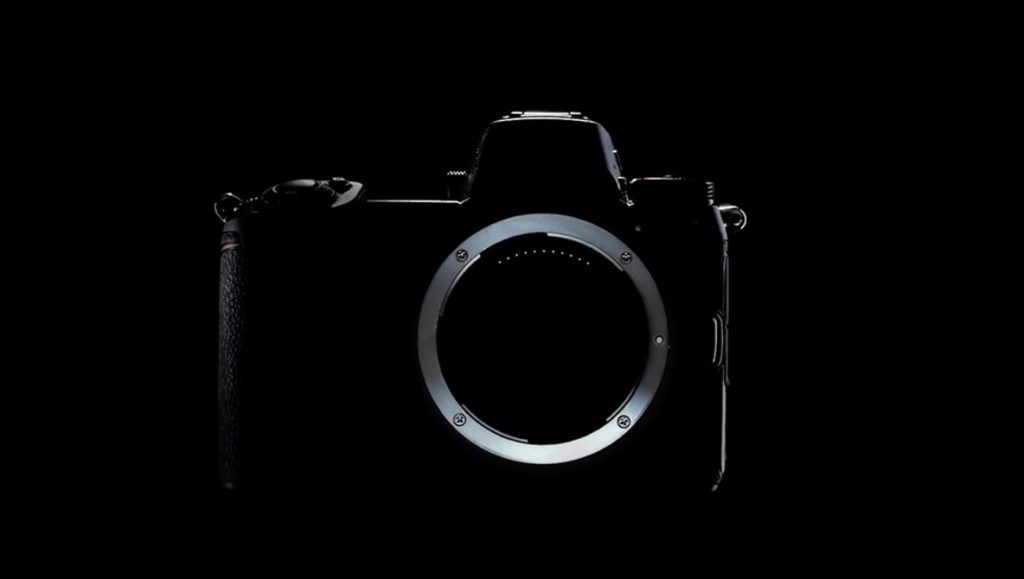
An intriguing video has just been posted on the Nikon Europe website. It is a teaser about the new Nikon Full Fram Mirrorless Camera we covered a week or so ago.

Nikon Full Frame Mirrorless Camera

At least we now have a hint of what the camera will look like. Nikon Rumours have gone further and produced a paper mock up.

Is the Nikon Mirrorless Full Frame Camera?


Nikon Announcement

There seems to be a date for an announcement. 23rd August 5am UK time there will be a livestream event from Nikon Japan

Filed Under: Gear, Journey, Mirrorless Tagged With: Nikon Cameras

Nikon Full Frame Mirrorless

by John Gough

Nikon Full Frame Mirrorless

A Nikon Full Frame Mirrorless System

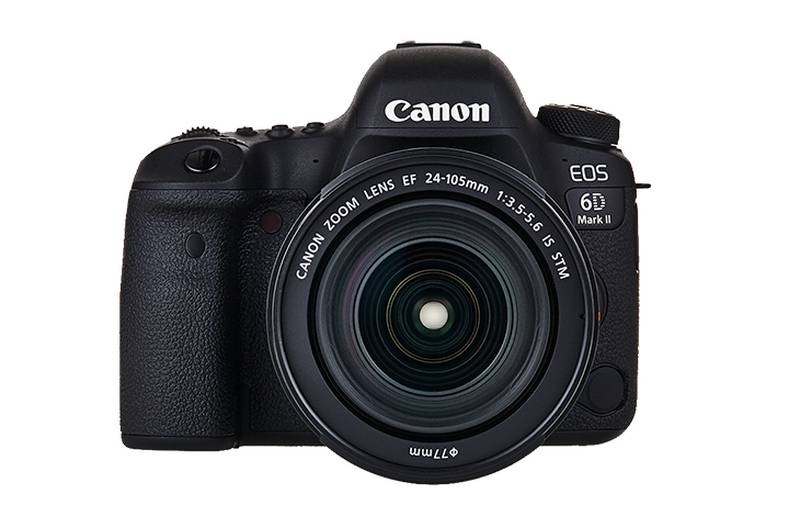
It is official, Nikon is working on a Nikon full frame mirrorless system. It will require a new mount to maintain the form factor that they want to achieve. A little of what that may look like can be glimpsed in this teaser video from Nikon Europe.

The press release from Nikon makes reference to a new mount. Nikkor lenses and the new mount adaptor will work with Nikon F mount lenses, making that investment in DSLR glass safe. We were recently discussing the Canon developments and surmised that this might be the route that Canon might follow. The new Nikon mount is rumoured to be called a Z mount.

The rumoured specifications are outlined by  Nikon Rumours and include two cameras, a 45MP model priced at around $4000 and a 25MP priced at around $3000 both with a lens.

Nikon says additional details, including a release date and a definite price, will be shared at a later date. We don’t know when. So, for people who have been waiting for this camera from Nikon, they will either have to continue waiting or switch to Sony.

Nikon maintains that they will continue with the development of DSLRs, but this announcement is very significant because it sounds the death knell for this type of camera system. What has been the backbone of the professional and enthusiast market for many years, will likely in the future become as niche as medium format cameras. Like with other changes in the industry, e.g the switch to smartphones and the demise of compact cameras, we may be surprised at just how quickly this happens.

Nikon is calling the Nikon full frame mirrorless system, the ‘next generation’ and very much confirms the direction of travel which has been led by Sony. It also underlines the enormous amount of work that both Nikon and Canon must put in just to catch up. Meanwhile, Sony is not standing still. Sony has both companies in their sights to achieve their objective of world domination.


Where I Buy

I buy my equipment from Wex because I have genuinely found that they offer great advice and customer service.
Filed Under: Cameras, Gear, Journey Tagged With: Nikon Cameras

Canon Full Frame Mirrorless Cameras

by John Gough

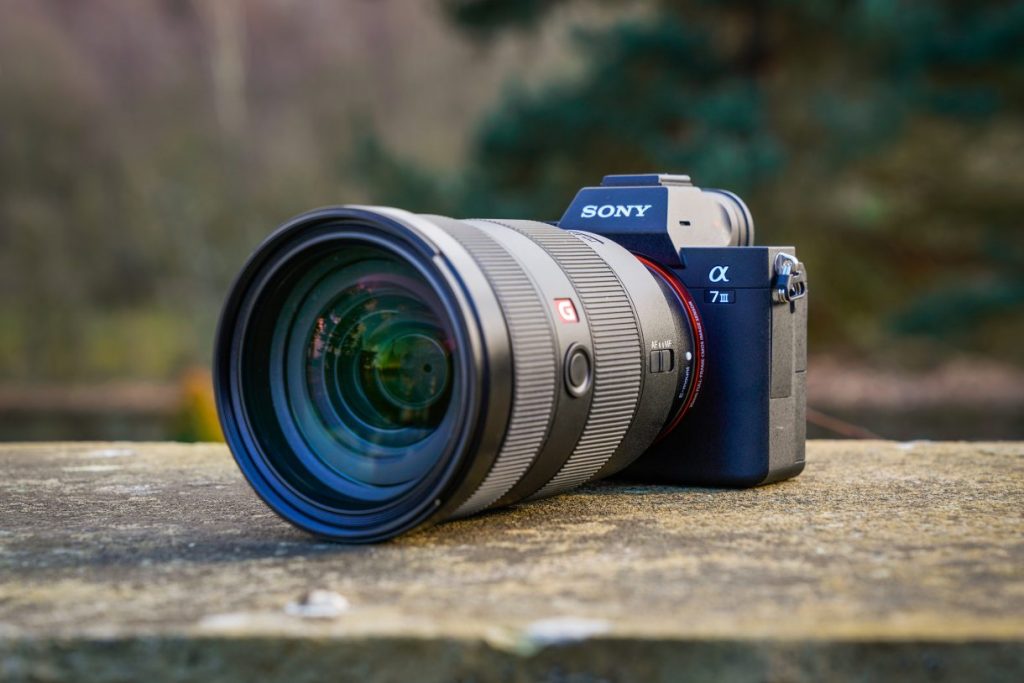
Canon EOS 6D Mark II


Sony lead in full frame mirrorless cameras. The Sony a7iii has been continually out of stock since the launch in March. However, there are a bunch of Nikon and Canon DSLR users who would like to make the switch to mirrorless but have so much invested in lenses, that they worry that the switch will be expensive and cumbersome.  As a result, they are clinging to their cameras in the hope that mirrorless full frame offerings from these manufacturers will come soon.

For Canon users, the wait was going to be until next year, but the latest rumours put release before the end of 2018. Perhaps even at Photokina before the end of September. So what do we know about Canon Full Frame Mirrorless cameras so far:

Canon are Committed to Full Frame Mirrorless

Canon are serious about this market because their traditional DSLR camera sales are bombing. Although the company is well diversified, changeable lens cameras are still an important segment, because they drive the sale of very profitable lenses. CEO Fujio Mitarai has said that Canon is committed and will “go on the offensive” to take a bigger share of the mirrorless market.

What about Canon EF Lenses

There is a question mark regarding how existing Canon DSLR lenses with an EF mount, will fit a full frame mirrorless Canon camera. The biggest challenge is flange distance, which may mean an adapter. When Canon launched the M range of APS-C mirrorless cameras they did offer an adapter for EF lenses. This may well be the direction of travel for full frame. Otherwise, the camera will have a relatively thick body compared to Sony.

What are the Rumours about Canon Full Frame Mirrorless Cameras

It looks like there are two cameras in the pipeline according to Canon Rumors.  One a ‘flagship’ version which will mimic the 5D Mkiii with a 30.4mp sensor. The other is a 24mp version which may be based on the 6D2 sensor. However, considering the stick that this sensor received at launch, it will have to be seriously modified. Launching two cameras is both a good thing and worrying at the same time. One of the big criticisms of Canon in the past has been that they have tried to differentiate their products by ensuring that the more expensive cameras have key features which are omitted from less expensive siblings e.g. the 5Diii has 4k but the 6D2 does not. Users feel short changed by this kind of strategy.

Canon Work to Get it Right

When the M series of mirrorless cameras was launched in 2012 they received a lot of criticism. Sony is the elephant in the room now. Their FF mirrorless cameras are now so advanced and popular, that if Canon go just for catchup it will be a big disappointment. Word is that  Canon has turned to their professional community, Explorers of Light to ensure they get it right.

Summary

This is make or break for Canon, therefore they have to get potential customers onside. I would hope that they engage with users prior to the launch. Watch this space.


Where I Buy

I buy my equipment from Wex because I have genuinely found that they offer great advice and customer service.
 

Filed Under: Cameras, Canon Cameras, Gear, Journey, Mirrorless Tagged With: Canon Cameras

Sony A7III Five Things You Did Not Know

by John Gough

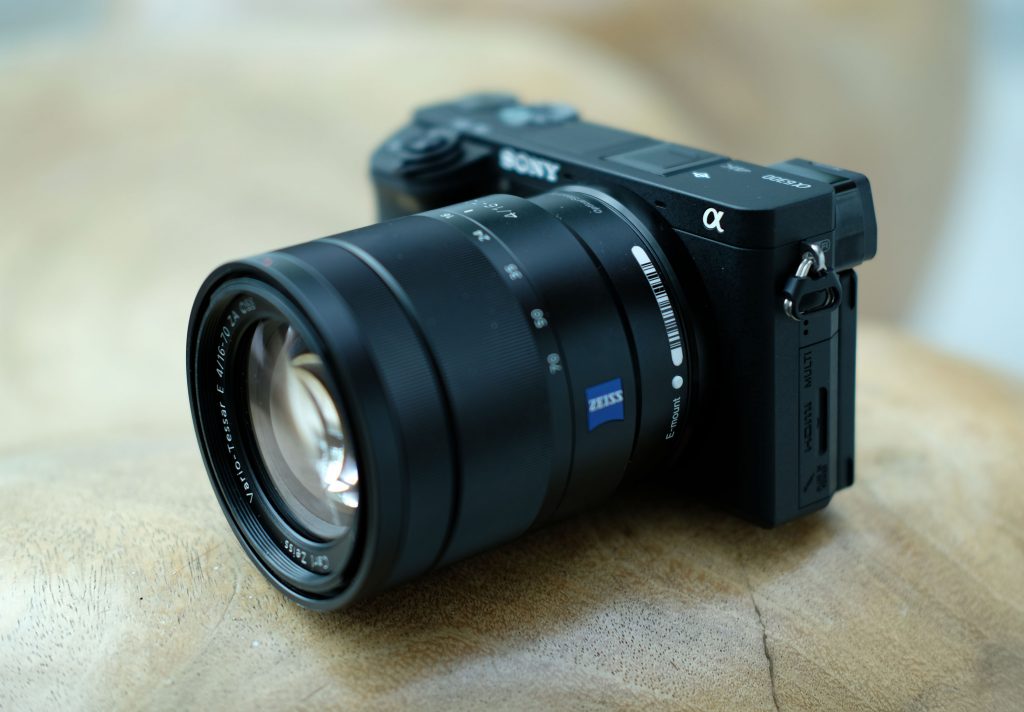
Sony a7 III

The Sony A7III is hot at the moment. It has been reviewed by everyone lucky enough to get their hands on one. All the reviews will tell you about the incredible AF, the low light performance and the eye tracking brilliance. However, what don’t you know? Here are five things you may not know about the Sony A7III.

1 The Sony a7III can Zoom with a Prime Lens

The Sony a7III has a crop mode which ensures that  APS-C lenses can be used. This means that if you are trading up from the a6500 or a6300 then the lenses you use on those cameras will work using the crop mode on the A7III. The crop mode just uses the centre of the sensor, in effect turning the full frame sensor on the A7III  into an APS-C sensor. This makes this camera so versatile. However, because there is a 1.5 crop factor between full frame and APS-C it means that if for example an 85mm prime lens is used. The crop factor can be turned on and it will convert the lens to 128mm. How do we know this? Well, check this video out 2.38 minutes in.

2 Sony A7III has 2x Clear Image Zoom

Incidentally, if you are not a Sony alpha camera user, then clear zoom may not be familiar. It is a function designed for stills but now extended to video which provides a 2x zoom. Using an optical zoom and Sony sensor technology. This is what Sony says:
Clear Image Zoom is a function that uses the Sony® exclusive By Pixel Super Resolution Technology. It allows you to enlarge the image with close to the original image quality when shooting still images. The camera first zooms optically to the maximum optical magnification, then uses Clear Image Zoom technology to enlarge the image an additional 2x, producing sharp, clear images despite the increased zoom ratio.
N.B. It cannot be used in RAW. There are restrictions on focusing. How do we know this? It is available on all Sony alpha cameras.

3 The Sony A7III Screen is Difficult to Read with Polarised Sunglasses.

A specific problem for polarised sunglass wearers. The solution is to get different sunglasses or turn the camera around until the screen comes into view. How do we know this? Well, check out this video about 1.24 minutes in.

4 Use Your Canon Lenses

Tthe Sony lens collection is getting better but their new lenses are expensive. It is almost as if they are following the printer model, sell the printer cheap and make money on the cartridges. However, if you are migrating from Canon, you do not have to change your Canon glass. Instead buy a converter and  use your old lenses. How do we know this? This article tells you all you need to know.

5 Best Low Light Performance Ever Tested

DXOMark is literally the go to benchmark for measuring camera sensor performance. The Sony A7III sensor scores an overall 96, which is remarkable considering the camera costs £2000 and in the DXOMark tests is compared to the £6000 Leica M10 which scored 86, the £5000 Nikon D5 which scored 88, and the £3000 Canon EOS 5D MkIV which scored 91. However, it was low light performance that blew them away
highlight is the low-light score, which at 3730 ISO is the highest of any full-frame 35mm sensor we’ve tested. 
How do we know this?
Sony A7 III Sensor review: Low-light performer

Conclusion

The Sony A7III is a remarkable camera, but as we write this in June ’18 there are only a few available worldwide, despite the launch in March. If you want to buy, I hope you manage to grab one anytime soon. Check out Amazon for availability:

Where I Buy

I buy my equipment from Wex because I have genuinely found that they offer great advice and customer service.
Camera Wrist Strap

I have avoided dropping my camera so many times using a simple inexpensive wrist strap like this one. Cameras and expensive lenses do not bounce! UK USA

Filed Under: Cameras, Gear, Journey, Mirrorless, Sony Tagged With: Sony Cameras

Sony a6700 Rumours

by John Gough

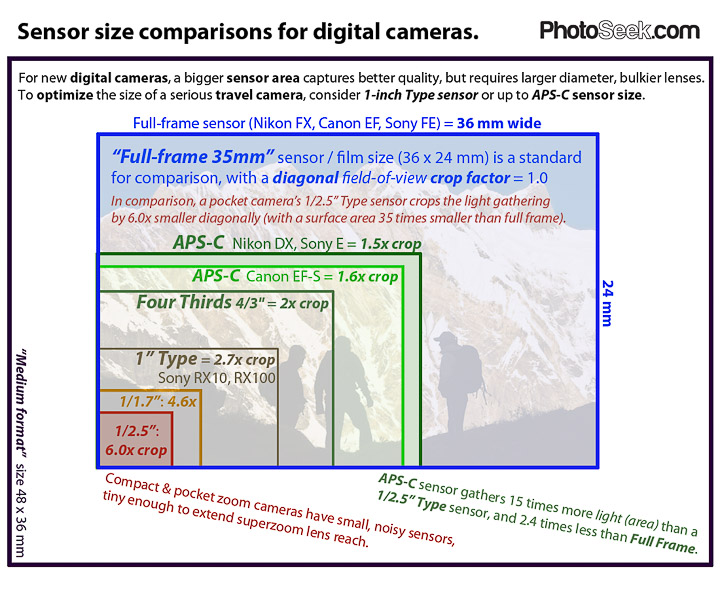
Sony a6300 with Sony Vario-Tessar T E 16-70mm F4 ZA OSS

Sony a6300


As a big fan of the Sony a6300, and I am looking forward to the rumoured Sony a6700. Rumoured specs are littering the internet, and the release date could be as early as this month. June. I am hoping that like the Sony A7III the spec on this camera will blow the opposition out of the water.

Prior to the launch of the Sony A7III, Fujifilm launched the Fujifilm X-H1, but it was totally eclipsed by the spec of the Sony A7III when it launched at around the same price. Sony is launching cameras with amazing specs because it is aiming to jump from the third biggest camera maker behind Canon and Nikon to be the top camera brand by 2021. They dominate the mirrorless  full frame arena, and they might just try to do the same with the Sony a6700 in the APS-C world.

So what could the changes on the a6700 look like:

Sony a6700 Auto Focus

Vastly improved AF with eye tracking. There is eye tracking on the a6500 but it has to be unlocked in the menus. The eye tracking on the Sony a7III is borrowed from the Sony A9 and according to reviewers is amazing.


Sony a6700 Low Light Performance

Standard ISO to reach the 51200. This is available on the Sony a7III and shooting at 6400 is ‘insanely clean’ according to PetaPixel

Faster Continuous Shooting

Rumoured increases in continuous shooting may be wide of the mark because the Sony a6500 already has continuous shooting at 11fps and the a7III has 10fps. However, the A9 is at 20fps with no blackout. Could the a6700 be a mini A9? A 1/8000th shutter may also be included.

Better Battery Life

Battery life on the a6xxx cameras has always been modest at around 310 shots. The A7III boasts 710 shots, so Sony has the technology to make a big difference on the Sony a6700.

Sony a6700 Stabilisation

Again Sony has the technology to match the in body stabilisation on the A7III. Sony maintains that the 5 axis stabilisation on the A7III is equivalent to 5 stops. Add that to the higher workable ISO’s and you have a real low light performer.

Sony a6700 Screen

It will be a touch screen as on the a6500.  However it likely to be not just tiltable but fully articulated. This is becoming standard with the launch of the Fujifilm X-T100 which is tilt up, tilt down and forward facing.

Video

Rumoured 4K at 60fps

Sony a6700 Rumours Latest

This camera exists, but Sony are precious about not releasing any information prior to launch. How many of the rumours included here are true, we don’t know. However, if the rumoured features are available on other cameras in the Sony line up, then it is most likely that they will appear on their flagship mirrorless APS-C camera, the Sony a6700.

If that is what they decide to call it!


Where I Buy

I buy my equipment from Wex because I have found they offer great advice and customer service.


Filed Under: Cameras, Gear, Mirrorless, Sony Tagged With: Sony Cameras

The Camera Sensor. Does Size Matter?

by everywhereman

Thanks to Photoseek.com for this graphic


I have tried to make sense of sensors, and address the question, Is a bigger camera sensor better?

What is a Camera Sensor?

It is the digital equivalent of film. It captures light and converts what you see through a viewfinder, EVF, or LCD screen into an image.

How does a Camera Sensor Work?

A camera sensor uses millions of tiny light cavities or “photosites” to record an image. When the shutter is pressed photosites collect photons and store these as an electrical signal.  (Photons are particles which transmit light i.e. light is carried through space by photons. That is all we need to know!) The more photons that are collected by the photosites the stronger the electrical signal. The different signal strengths across the millions of photosites are then converted into digital values. This is capable of being converted into a greyscale image, however not a colour image because photosites are unable to distinguish how much of each primary colour they have recorded.

What is the Difference between a Photosite and a Pixel?

Pixels and photosites describe the same light cavity on a camera sensor. However, pixels have also come to describe the smallest element of an LED screen. Which is the display side of the sensor rather than the light capture element. So pixels describe both and this can cause confusion.  Camera manufacturers refer to sensor size in terms of megapixels (i.e. one million pixels). For example, a 21.1 megapixel sensor is 5616 photosites wide by 3744 photosites high.

How does a Camera Sensor Capture Colour?

Each photosite is in effect colour blind, only recording the total intensity of the light that strikes its surface. To capture colour images, a beam splitter is placed over each photosite. to filter the light so that only one primary colour is allowed through. The other colours are discarded. This colour filter array was invented by Dr Bryce E. Bayer, a scientist working for Kodak. He invented the particular red, green and blue arrangement of colour filters to capture colour information.

Camera Sensor

Bayer Filter Array

The red filters, for example, will only allow red light photons to pass into the pixel below it. Each line on the array has only two of the primary colours either red/green or blue/green. The camera then uses an algorithm to work out the colour of each pixel. In fact, it combines a 2×2 square of four photosites together to predict the colour and its intensity. 

How Big is the Camera Sensor in Your Smartphone or Camera?

The graphic above is from PhotoSeek.com and compares different sensor sizes.

Smart Phones Sensor Size

Smartphones utilise very small sensors. As an example, the sensor size on an Apple iPhone 7 is 1/3inch, 12megapixels, pixel size 1.22 microns. Diagonal measurement 6.0mm, area 17.3 square mm. A full frame sensor is 55 times bigger.

Compact Cameras Sensor Size

A Canon Powershot has a sensor size 1/1.7inch, 12megapixels, pixel size 1.9 microns. Diagonal measurement 9.3mm, area 41.51 square mm. A full frame sensor is 21 times bigger.

Micro Four Thirds

This is a sensor size widely used on Olympus and Panasonic cameras that was introduced in 2008 to create smaller camera bodies and lenses. For example, the Olympus PEN F has a micro four thirds sensor, 20 megapixels, pixel size 3.3 microns. Diagonal measurement 21.6mm, area 225 square mm. A full frame sensor is 3.8 times bigger.

APS-C

Widely used in SLR cameras. For example, the Fujifilm X-Pro 2 has an APS-C sensor, 24 megapixels, pixel size 3.9 microns.  Diagonal measurement 28.2mm, area 370 square mm. A full frame sensor is 1.54 times bigger.

Full Frame

Used on digital SLRs and mirrorless camera. For example, the Nikon D600 has a full frame sensor, 24 megapixels, pixel size 6.0 microns.  Diagonal measurement 43.2mm, area 860 square mm.

So Does the Camera Sensor Size Matter?

A bigger sensor is better for two reasons. Firstly the bigger sensor can capture more light, which means more detail, better colour rendition a sharper image and more depth of field. Smartphones can take great images, but the sensor on a full frame camera is 55 times bigger, and that is a lot more light. Secondly, the size of the photosites/pixels does matter. On full frame cameras, the increase in pixel size means that manufacturers can offer amazing ISO performance, which means better low light performance and more dynamic range.

It is therefore important to make a decision on which camera to buy, not based just on the sensor size measured by the number of megapixels. It is also the size of those pixels that count. A smartphone may be 12 megapixels, but the pixels are small about 1.55 microns compared with 5.2 microns on a similar size APS-C sensor.

Camera manufacturers are a bit vague on pixel size. This may be because there is a trade off, between the area of the sensor and the size and number of pixels that it can contain. As full frame sensors gradually creep towards 30 megapixels and beyond, this may be close to the maximum based on current technology. For photographers and camera manufacturers, yes, it is all about size!


Filed Under: Gear, Journey, Photography Tagged With: photography

Fujifilm X-H1 Review of Reviews

by John Gough

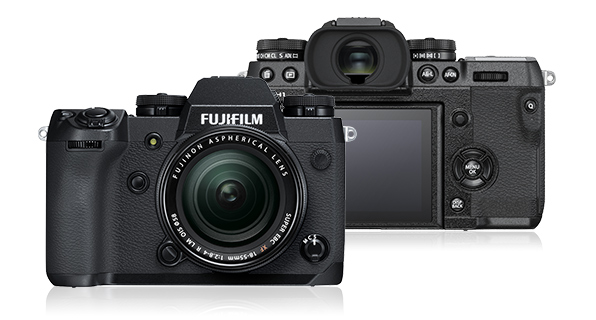
Fujifilm X-H1

Fujifilm X-H1

Fujifilm X-H1 is the H for hype or does this camera live up to its billing? We trawl the reviews and forums to try and get a balanced view on the Fujifilm X-H1 as a stills camera.

Already a fracas has broken out. If you dare to criticise a Fujifilm camera then be prepared for a kickback. Their users are the most loyal in the world. However,  YouTube photography supremo, Tony Northrop challenged the Fuji orthodoxy by claiming that the full frame sensor on the Sony a7III had two times the image quality of the Fujifilm X-H1 sensor. We know what he meant but……

However, Northrop hit back:

So what is the point? Well, it reflects a disappointment that this camera was probably not the camera Fuji enthusiasts were dreaming of. Why? Let’s look at the camera in more detail.

Fujifilm X-H1 Specification

  • 24.3-million-pixel X-Trans APS-C CMOS III sensor
  • 5 axis in-body image stabilization: IBIS
  • 3in, 1.04m-dot tilt screen
  • Tiltable touch sensitive LCD
  • ISO 200-12,800 (expandable to ISO 100-51,200)
  • Continuous shooting up to 14fps
  • Two card slots
  • 673g body only, including battery and memory card. 166g heavier than the XT2
  • 310 shot NP-W126S Li-ion battery
  • Wi-Fi with Bluetooth
  • Optional VPB-XH1 battery grip
  • 139.8×97.3×85.5mm (WxHxD)
  • 25% tougher weather-resistant body
  • Silent electronic shutter with a maximum speed of 1/32,000 sec,
  • 91 auto-focus points (expandable to 325)
  • A sub LCD monitor on the top plate
  • 4K capture at up to 200 Mbps

Fujifilm X-H1: DPReview Review

The DPReview review awards the camera a sliver award, because the camera although worthy does not excel in any respect:

  • The size and weight of the camera has been increased over the XT2 because of the addition of IBIS and the thermal cooling required for long bursts of 4K video
  • The settings for stills and video can remain separate, enabling easy swapping between modes.
  • There is a dynamic range priority setting which can assist in drawing detail out of shadows.
  • The magnesium alloy body is 25% thicker and the surface hardness has been increased to improve durability.
  • The top plate LCD panel stays on even when the camera is switched off and can be configured to only show vital information.
  • The weather sealing has been improved and the camera can function at -10C.
  • The 310 shot battery should last half a day of dedicated photography
  • Need to fine tune the AF behaviour to get sharp results
  • Face detection performance is good but variable depending on the lens.
  • Low light AF is said to be improved
  • AF works best in the phase detection area at the centre of the sensor
  • The 5x IBIS is not consistent across all lenses. Expect about 2x with wide angle lenses and 3,3 with telephoto.
  • An excellent JPEG engine with excellent creative colour modes
  • Slight ‘glitching’ in fine colour detail in RAW but overall low noise levels are low and detail acceptable.
  • The touchscreen can be slow to respond

 I’m not sure the number and style of control points necessarily reflects the needs of the user interface, now it’s trying to accommodate both stills and video

the X-H1 [is] up against some pretty fierce competition: Sony, for example, offers the broadly comparable a6500 for less money or the impressive-looking full-frame a7 III for only a little more.

Fujifilm X-H1: Cameralabs

Cameralabs provide one of the most detailed reviews available, here are the bits I found interesting:

  • Could be described as an XT2 with IBIS, a touchscreen, bigger grip, better video and Bluetooth
  • One of the heftiest mirrorless cameras
  • It is stronger mare scratch resistant and has 94 points of weather sealing
  • The display remains active when the camera is switched off, indicating at a glance the shots and battery life remaining.
  • Some glasses wearers prefer the viewfinder to the XT2
  • It is possible to record stills to both cards but not video
  • The X-Trans III sensor is the same as in the XT2 and is now two years old.
  • Vertical Power Booster (VPB X-H1) makes room for three batteries but adds to cost and bulk.
  • Unstabilised lenses become usable due to the IBIS. Plus the IBIS make in camera composition easier with telescopic and other lenses.
  • The phase detect and contrast based autofocus systems are the same as the XT2 and therefore perform similarly. However, it has been tweaked to work better in low light.
  • Face detection and eye detection can be erratic

I say it in every Fujifilm review, but still believe they have the best colour science in the industry.

I understand Fujifilm’s eagerness to launch their first body with built-in stabilisation, but feel the X-H1’s size, price and position would have been more comfortable with a new sensor and battery.

Fujifilm X-H1: Kai W

If you want to see the weather sealing qualities check this out:


Fujifilm X-H1: Fstoppers

Usman Daywood in the Fstoppers review calls this a disappointing release from Fujifilm.

  • Comments online wonder where this product fits and when there will be a replacement for the XT2
  • Major changes over XT2 re stills photography are an information top plate, IBIS and touchscreen

The Fujifilm X-H1 is a disappointing and confusing release from the company which is very unlike them. This feels rushed and completely unnecessary, and it would have been much better to simply wait and release a proper update the X-T2. 


Fujifilm X-H1: Digital Camera Weekly

A very positive review from Digital Camera Weekly

  • The light trigger shutter takes getting used to. Very little pressure is needed.
  • The shutter is very quiet due to a clever shock damping on the mechanical focal plane shutter
  • The deep grip makes the camera easy to hold especially with larger lenses
  • The IBIS enables sharp images to be taken handheld at 1/8 sec at 55mm.
  • The expanded dynamic range feature lifts the base ISO level by 1-2EV.
  • Fujifilm includes lens corrections into the RAW files as well as JPEG processing.

the X-H1 makes a lot of sense, especially for those who have already invested in the X-mount system or are swayed by its design, image quality and lenses. 

Fujifilm X-H1: Photography Blog

Another positive review from Photography Blog

  • The lens mount is reinforced to be more damage resistant.
  • It is very convenient to be able to check the camera’s key settings with a quick glance at the top LCD
  • It is possible to change the focus point whilst holding the camera up to your eye by dragging your thumb across the touchscreen.

While the new Fujifilm X-H1 is the best-specced, best-performing X-series camera to date, curiously we feel that it doesn’t quite have the widest appeal, both within the Fujifilm eco-system and the camera market as a whole.

So what Fujifilm have mostly added, they’ve perhaps also taken a little away, with the addition of IBIS, bigger handgrip and top LCD screen making the X-H1 the largest X-series APS-C camera to date.

it’s not the only camera that’s being directly challenged by the aggressive pricing of the A7 III, but when the APS-C sensor X-H1 is physically bigger than the full-frame sensor A7 III at the same price-point (if you factor in the VPB-XH1), Sony seem to have the edge, at the very least in marketing terms.

Fujifilm X-H1: Conclusion

When I first handled the X-H1 I was surprised at how bulky it was. I was disappointed that the retro feel of Fujifilm cameras had been jettisoned. However, it may just be a function of progress as mirrorless cameras take on more features and technology. However, I wonder whether Fujifilm had an inkling that Sony was about to release a ball buster in the Sony A7III, and rushed to release the X-H1 without properly resolving battery and other issues.

Where to Buy

I buy my equipment from Wex because I have found they offer great customer service.


Filed Under: Cameras, Fujifilm, Gear, Journey, Mirrorless Tagged With: Fuji Cameras

Photography Show

by John Gough

A Model at the Photography Show / John Gough / Sony a6300

I went to the Photography Show today, these are just a few impressions:

Canon 6DII

The Canon 6DII had been reduced in price again with a double discount scheme. Below £1400 and with a 24-70 lens thrown in for an extra £100. This is a sure sign that this much maligned camera is struggling. I talked to the guys on the Canon stand who said what we know, which is that Canon was afraid of ruining the market segment for the Canon 5D IV, by raising the specification too far. This strategy has backfired.

Sony A7III

The star of the show was the Sony A7III, I had read the reviews but was not sure how it would feel. It is a small light camera but feels solid in the hands. The EVF is big and bright. I compared it with my Sony a6300, and it is a bit bigger. I think it could be used for street photography. I want one.

Fuji H-XT

There has been some magic lost here. Fuji folk would never admit it. They are the most die hard camera fans there are. Fuji does some excellent marketing to keep them loyal and close. The camera, however, did not have the look and feel of the X-T2, X-T20 or the beautiful X-Pro2. I think it is losing the vintage experience and replacing with a top screen c’ Nikon year 2005, which has something to do with it. Plus Olympus and Sony are demonstrating that cameras do not have to be big and clunky.

Adapting Canon Lenses to Sony

I admit it was on the Sony stand that I heard this, but the Sigma M11 works well joining Canon glass to Sony bodies. There are frequent updates that can be downloaded to the adapter as new lenses and bodies are introduced. There is a big demand for this adapter as photographers switch from Canon to Sony.

Trashhand

Listened to Trashhand on the Live Stage. “Call me Trash”. Liked his approach to street photography which was a mix of people, architecture and urban landscape. He recounted that he had been spat at and assaulted working on the mean streets of Chicago, LA and New York. “If people complain, it is their fault. If they don’t want their photo taken then they should not be on the street”.

Paul Sanders

Saw Paul Sanders in the Adobe Theatre. Beautiful minimalist landscape using Lee big stopper filters to their full potential i.e. 10 and 20 minute exposures.

The End

An excellent day, although I did get collared by security for taking a photograph of a door. I had to point out that this was a photography show.

Looking Out / John Gough / Sony a6300

Filed Under: Gear, Journey, Photography, Visual Art Photography Tagged With: Visual Art

How Do I Transfer Pictures to a PC from a Smartphone?

by John Gough

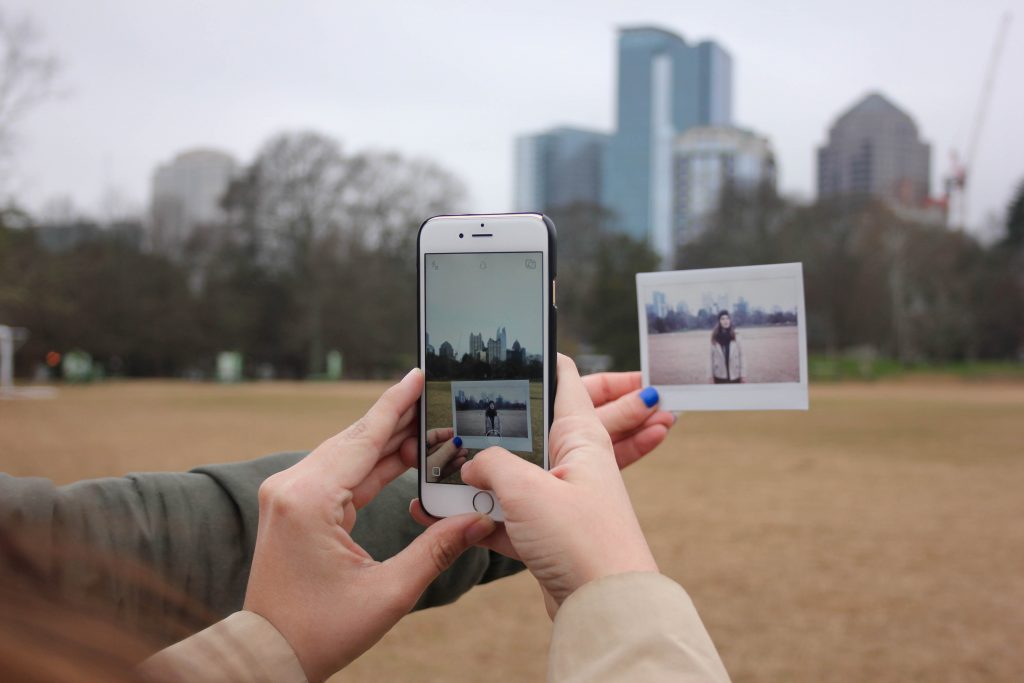
Photo by Rachael Crowe on Unsplash

One of the reasons I do not use my camera phone for ‘serious’ photography, is that I find it awkward to transfer pictures to a PC from my iPhone.

I am well aware that there are lots of different solutions out there regarding the transfer pictures to a PC from a smartphone, but I also know that my method, which is mailing them to myself is not the most efficient! Furthermore, I am also aware that I am too much of a curmudgeon to pay for iCloud.

I am not the only one confused. One of the most asked questions on Google is ‘how do I transfer pictures to a PC from a Smartphone?’

So what is the best solution?

Simple Way to Transfer Pictures to a PC from a Smartphone.

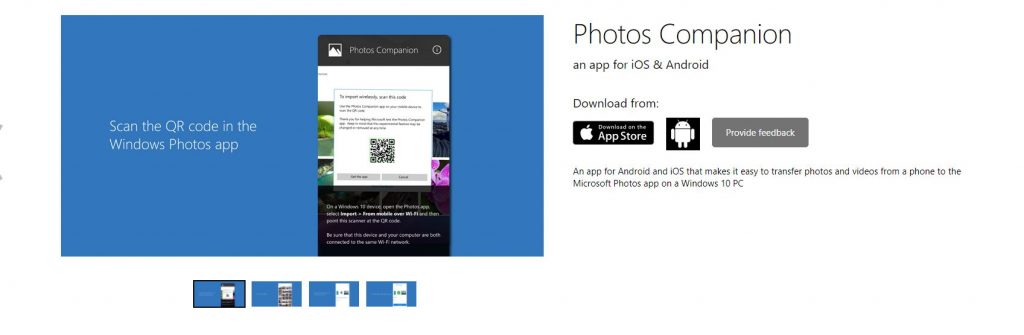
There is now an app from Microsoft. It is new and still in a testing phase, but it is available and works a treat. Furthermore, it does not involve the Cloud but it does require WiFi. It is free. It works for both Android and iPhone. It simply and seamlessly transfers pictures from your smartphone to a PC. How?

  • Find the Microsoft Photos Companion App in your App Store. And download to your phone.

Microsoft Photos Companion

  • Open the Windows 10 Photos App on your PC.
  • To make the Photos Companion App active. Go to the top right: See More>Settings>Preview>Help Microsoft test the mobile import over WiFi feature>Slide to On.
  • On the Windows 10 Photos App: Import>From mobile over WiFi
  • Open the Photos Companion App on the phone
  • Scan the QR code on the PC screen, to pair the PC and the smartphone.

Microsoft Photos App QR Code

  • Select the images to be transferred hit Done.
  • The pictures transfer across seamlessly to the Windows 10 Photos App on your PC.
  • Drag the pictures from the Photos App to your pictures folder.

The pairing isn’t permanent and will have to be re-established for each sharing operation, but it is quick and easy. If you think this could be useful, head to the Microsoft site to find out more.

I realise that there are many options out there to transfer pictures to a PC, but this one is both free and simple. The big advantage for me is that I no longer have to mail my own pictures to myself!

Filed Under: Gear, Journey, Post Processing Tagged With: Post Processing

« Previous Page
Next Page »
Copyright: John Gough 2025